.webp?width=200&height=114&name=2x-Packleader-logo-large%20(1).webp "2x-Packleader-logo-large (1)")

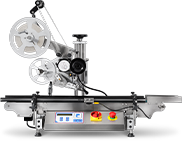
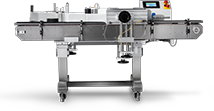
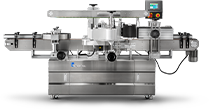
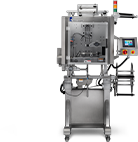
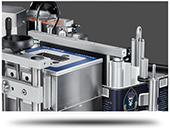
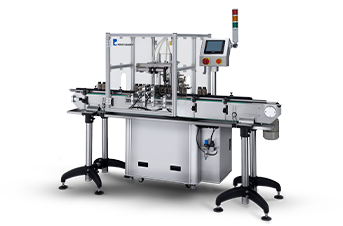
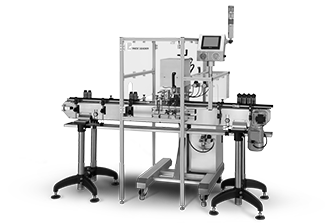

In a pharmaceutical plant, a labeling machine isn't just production equipment. It's part of the regulated production record for the product itself. That's what makes pharmaceutical pressure-sensitive labeling machines one of the more difficult pieces of equipment to bring through validation, and one of the most common places where quality, engineering, and operations end up in a standoff.
If your team has ever hit a wall trying to get a labeling line signed off for GMP production, you're not dealing with a one-off problem. You're dealing with a structural tension that shows up in almost every pharmaceutical packaging environment.
Why Labeling Machine Validation Is So Difficult in Pharma
Validation exists to prove that a process is documentable, repeatable, and auditable — every time, on every batch. Pressure-sensitive labeling introduces more variables into that equation than most packaging steps, which is exactly why labeling machine validation tends to stretch timelines and strain internal resources.
A few structural realities drive this:
Label materials aren't static.
Adhesive performance, liner release, and label stock can vary slightly between lots, and even small variation can affect placement accuracy or adhesion under different container surfaces and temperatures. Our breakdown of pharmaceutical labeling for your products goes deeper into how material choice shapes what's realistic to validate.
Every changeover is a potential revalidation event.
SKU variation, container shape changes, and label size changes all put pressure on a validated process. If your line handles multiple products, you're not just validating a machine once, you're validating how consistently it performs across every configuration it runs.
Sensor and registration accuracy has to hold up over time, not just at qualification.
A labeling machine can pass IQ/OQ/PQ and still drift out of tolerance months later if sensors, tooling, or web tension aren't monitored. This is where a lot of plants get caught off guard, and it's a large part of what we cover in our guide to pharma labeling machine troubleshooting.
Documentation has to match reality, exactly.
Quality teams aren't just checking whether the machine works. They're checking whether the machine's actual behavior matches what's written in the validation protocol. Any gap between the two, a sensor recalibration that wasn't logged, a changeover step that isn't documented, becomes a compliance risk.
The Root Causes Behind Most Validation Struggles
Most validation headaches trace back to a small set of root causes:
- Equipment that wasn't built with GMP production in mind. Machines designed for general consumer packaging often lack the consistency, documentation support, or engineering transparency that pharmaceutical validation requires.
- Manual intervention built into the process. Any step that depends on an operator's judgment (adjusting placement by hand, manually correcting misfeeds) is harder to document as repeatable. Our step-by-step guide to switching from manual to automatic labeling walks through why this shift matters as much for compliance as it does for throughput.
- Equipment that can't flex without full requalification. If a machine can only run one label size or container format without extensive rework, every new SKU becomes its own validation project. This is a common theme in our post on maximizing flexibility with pharmaceutical bottle labelers.
- Add-on components that weren't designed to integrate cleanly. Print-and-apply units, coders, and inspection add-ons can each introduce their own validation burden if they aren't built to work with the base machine. We address this directly in can an automatic label printer add-on simplify your pharmaceutical line.
Warning Signs Your Labeling Process Isn't Validation-Ready
A few patterns tend to show up before a validation project stalls out or fails:
- Placement accuracy varies noticeably between shifts or operators
- Changeovers routinely require unofficial "tweaks" that never make it into documentation
- Quality flags labeling as a recurring source of deviations or CAPAs
- Engineering can't fully explain why the machine performs differently across SKUs
- Tamper-evident or security features are inconsistent across identical batches, a risk we unpack in how to choose tamper-evident labeling machines
If more than one of these sounds familiar, the issue usually isn't a single bad batch. It's the underlying equipment and process design.
What Validation-Ready Labeling Actually Looks Like
Equipment that validates cleanly and stays validated tends to share a few traits: consistent placement across batches without operator correction, changeovers that are controlled and repeatable rather than improvised, and documentation that's built into the process rather than reconstructed after the fact. It's the same standard our team applies across pharmaceutical packaging best practices and the broader pharma packaging trends shaping how plants are approaching labeling and label design right now.
This matters even more as production volume grows. A machine that validates fine at low volume can become a liability once you're running more SKUs or higher batch frequency, a scaling problem we've also seen play out in wraparound labeling, covered in what makes it hard to scale wraparound labeling capacity.
Questions to Ask Before You Invest in New Labeling Equipment
Before bringing new equipment into a validated environment, it's worth pressure-testing a few things with your engineering and quality teams:
- Can this machine hold placement accuracy across our full range of container sizes and label formats without manual adjustment?
- What does the changeover process look like, and how much of it is documented versus operator-dependent?
- How does the manufacturer support IQ/OQ/PQ documentation and ongoing calibration?
- Can the machine integrate with our existing validated line, or does it introduce new failure points?
- What happens to validation status if we add SKUs or change label materials down the road?
Answering these honestly is usually a faster path to a validated, compliant labeling process than treating validation as a paperwork exercise to get through after the equipment is already installed.
Reducing Compliance Risk Starts With Equipment Fit
Pressure-sensitive labeling doesn't have to be the hardest part of your validation process. Most of the friction comes down to equipment that wasn't built for the level of consistency, flexibility, and documentation that pharmaceutical labeling compliance requires. Getting equipment fit right from the start (rather than working around a machine that fights you every changeover) is what separates a validation process that holds up from one that keeps generating deviations.



.webp?width=360&name=2x-color-logo%20(1).webp "2x-color-logo (1)")