.webp?width=200&height=114&name=2x-Packleader-logo-large%20(1).webp "2x-Packleader-logo-large (1)")


Tamper-evident labeling is not a packaging afterthought. For production teams in pharmaceutical, nutraceutical, household chemical, and consumer goods manufacturing, it is a compliance requirement, a consumer safety measure, and a liability consideration that directly influences which labeling equipment belongs on your line.
Choosing the wrong equipment creates real operational problems: labels that don't seal consistently, lines that can't maintain throughput under inspection pressure, and equipment that can't adapt as SKU counts change or container formats shift. Choosing well means building reliability and regulatory confidence into the production line itself.
This guide walks through the two primary equipment types used for tamper-evident labeling (pressure-sensitive and wraparound), explains how each works, what they do well, and what factors should drive your evaluation decision.
What Tamper-Evident Labeling Actually Means
A tamper-evident label is applied in a way that creates a visible indication of tampering or entry. When properly applied, the label either tears, leaves residue, or breaks apart if someone attempts to remove or alter it before the intended point of use.
This is distinct from tamper-resistant packaging, which uses physical barriers like induction seals or shrink bands. Tamper-evident labels use the label itself, specifically its adhesive bond, perforation design, or material properties, to serve as the visible evidence layer.
In regulatory environments including pharmaceutical, OTC drug, and food packaging, tamper-evident labeling may be required by FDA regulations, serialization standards, or customer compliance programs. Even outside regulated industries, it is widely used in household chemical, nutraceutical, and personal care manufacturing where brand protection and consumer trust are operational priorities.
The Two Primary Equipment Types for Tamper-Evident Labeling
Pressure-Sensitive Labeling Equipment
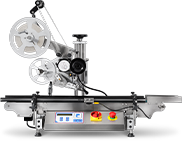
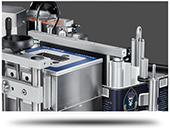
Pressure-sensitive labeling equipment applies pre-printed, die-cut labels with a pressure-sensitive adhesive to containers as they move through the production line. The label adheres to the container surface through contact and pressure applied by the equipment's wipe-down or tamp mechanism.
How it works for tamper-evident applications: Pressure-sensitive tamper-evident labels are engineered with adhesive and facestock combinations that produce a tamper-evident effect. Common approaches include:
- Void labels: labels that leave a "VOID" pattern on the surface if removed
- Destructible facestock: labels that tear into small pieces if peeled, making reapplication impossible
- Sequential or serialized labels: labels printed with lot numbers, barcodes, or serial codes that connect the label to a specific production batch
The equipment itself applies these labels consistently at controlled speed and pressure. What creates the tamper-evident function is the label material and adhesive, selected by the packaging engineer or procurement team when specifying label stock.
Where pressure-sensitive labeling equipment fits best:
- Containers with flat or cylindrical surfaces that accept a single-panel label
- Applications where the tamper-evident function is handled at the label material level
- Lines requiring high throughput with consistent placement accuracy
- Operations managing multiple SKUs with varying label sizes, because format changeovers are generally faster
What pressure-sensitive labeling equipment does not do: Pressure-sensitive labeling applies a label to the container surface. It does not wrap the label across a lid or cap junction. For applications where the seal must span the container-closure interface, wraparound labeling equipment becomes the better option.
Wraparound Labeling Equipment
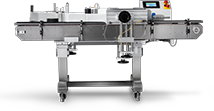
Wraparound labeling equipment applies a label that wraps around the full circumference of a container. The label begins on one side, travels around the body of the container, and overlaps at the seam, creating a continuous band.
How it works for tamper-evident applications: The wraparound format creates tamper evidence through the overlap seam. When the label wraps fully around a container, particularly when that wrap extends over the lid-to-body junction, any attempt to open the container breaks, tears, or visibly disturbs the label seam. The physical continuity of the label across the closure becomes the tamper evidence itself.
This is the geometry that makes wraparound labeling equipment the preferred choice for bottle caps, jar lids, and other containers where the closure interface needs to be sealed.
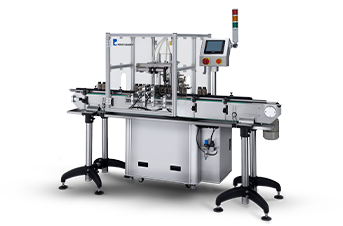
Wraparound labeling equipment applies labels using a continuous wrapping motion. The container rotates or is guided through the applicator while the label is pressed against its surface with consistent tension to ensure a clean, bubble-free application with a properly aligned seam.
Where wraparound labeling equipment fits best:
- Round bottles, jars, and containers where the label spans the body and the lid-to-body seam
- Applications where tamper evidence must be structural, not material-dependent
- Pharmaceutical and OTC drug packaging where the closure label must provide visible tamper indication
- Products where a full-circumference label also supports branding across the entire container surface
What wraparound labeling equipment does not do: Wraparound is most effective on round or cylindrical containers. Oval, square, or irregular containers may require pressure-sensitive approaches with label designs engineered for tamper evidence, because a wraparound label cannot consistently span a non-circular closure.
Key Evaluation Factors When Choosing Between Equipment Types
Container Geometry
This is the starting point for any evaluation. The shape of your container determines which equipment type can physically achieve tamper-evident sealing.
Round bottles and cylindrical containers are compatible with both pressure-sensitive and wraparound labeling equipment. The question then becomes whether the tamper-evident function needs to span the lid junction or can be handled through label material.
Non-round containers, including rectangular, oval, or custom-shaped formats, generally require pressure-sensitive labeling equipment with tamper-evident label materials, because wraparound does not deliver reliable seam tension across non-circular geometry.
Closure Interface Requirements
Ask directly: does the tamper-evident indicator need to cross the container-closure interface?
If yes, a wraparound label that physically spans the lid-to-body seam is the more reliable solution. If the tamper evidence can live entirely on the container body without needing to span the cap or lid, pressure-sensitive labeling with appropriate materials may be sufficient.
Many pharmaceutical applications require that the tamper indication cross the closure. Many consumer goods applications do not. This distinction alone often resolves the equipment type question.
Label Material and Adhesive Specification
The tamper-evident function in pressure-sensitive labeling is driven by the label material and adhesive, not the equipment itself. Evaluate what label materials your current supply chain supports, what your compliance requirements specify, and whether the equipment you are evaluating can handle the facestock thickness, release liner, and adhesive properties of tamper-evident label stock.
Some tamper-evident label materials are thicker or have different release liner properties than standard labels. Equipment that runs well on standard label stock may require adjustment or component changes to run tamper-evident materials reliably.
Throughput and Line Speed
Both pressure-sensitive and wraparound labeling equipment are available across a wide range of throughput capabilities, from semi-automatic bench-top systems to fully automatic inline systems running hundreds of containers per minute.
Establish your current throughput requirement and your projected requirement over the next three to five years before evaluating equipment. Selecting equipment that is already at the top of its rated speed range leaves no room for production growth without another capital investment.
Changeover Frequency and SKU Variation
If your operation runs multiple container formats, label sizes, or product SKUs, changeover time becomes a significant operational factor.
Pressure-sensitive labeling equipment generally offers faster mechanical changeover because adjustments are made to the label feed, applicator position, and timing. Wraparound labeling equipment may require more adjustment when container diameters or label dimensions change significantly, because the wrapping mechanics must account for container circumference.
If you run more than five to ten SKUs or anticipate SKU growth, evaluate changeover time in real-world demos, not just spec sheets.
Regulatory and Compliance Requirements
Pharmaceutical and OTC drug manufacturers operate under FDA regulations that specify tamper-evident packaging requirements. Nutraceutical and dietary supplement operations may be subject to similar requirements depending on product classification and distribution channels.
Know your regulatory requirements before specifying equipment. In some cases, compliance documentation requires that equipment performance data, including label placement accuracy, seal integrity, and application consistency, be available for validation or audit purposes. Equipment that supports IQ/OQ/PQ documentation requirements simplifies the validation pathway.
Equipment Type Comparison at a Glance
| Factor | Pressure-Sensitive Labeling | Wraparound Labeling |
|---|---|---|
| Container shape compatibility | Round, oval, square, irregular | Best on round/cylindrical containers |
| Tamper-evident mechanism | Label material and adhesive | Physical wrap across closure seam |
| Closure interface coverage | Requires specific label design | Natural coverage through wrap geometry |
| Changeover flexibility | Generally faster across SKUs | More adjustment for diameter changes |
| Label material requirements | Tamper-evident facestock required | Standard materials often sufficient |
| Regulatory documentation | Equipment accuracy and consistency data | Equipment wrap consistency and seam data |
| Best fit industries | Consumer goods, personal care, nutraceuticals, food | Pharmaceutical, OTC, household chemical |
Frequently Asked Questions
Which wraparound labeling machine offers reliable tamper-evident labeling?
Reliable tamper-evident performance from a wraparound labeling machine depends on three things: consistent label tension during application, repeatable seam placement at the closure interface, and label material compatibility with the container surface.
Look for equipment that maintains consistent rotational speed through the label application zone, uses a wrap roller or belt system that applies even pressure around the full container circumference, and can be calibrated for seam position across different container diameters. Seam placement accuracy at the lid-to-body junction is the critical specification to evaluate, not just overall label placement accuracy. A label centered on the body but misaligned at the closure provides inconsistent tamper indication.
Pack Leader USA wraparound labeling equipment is built for consistent seam placement on round containers, supporting tamper-evident applications in pharmaceutical, nutraceutical, and household product manufacturing.
What pressure-sensitive labeling machine works best for tamper-evident seals?
The best pressure-sensitive labeling equipment for tamper-evident seals is equipment that maintains consistent application pressure and wipe-down force across the label surface, because the tamper-evident bond forms between the label adhesive and the container surface during application.
Key capabilities to evaluate: consistent applicator pressure across the label face, wipe-down or tamp mechanism that ensures full adhesive contact, and the ability to run tamper-evident label stock (which may be thicker or have different liner weights than standard labels) without misfeeds or edge lifting.
Pressure, not speed, is the primary driver of tamper-evident seal integrity in pressure-sensitive applications. Equipment that sacrifices wipe-down contact for line speed will produce inconsistent tamper-evident bonds.
Pack Leader USA pressure-sensitive labeling equipment supports consistent label application across a range of container types and label materials, including tamper-evident specifications.
Can the same labeling machine handle both standard and tamper-evident labels?
In most cases, yes. Pressure-sensitive labeling equipment that runs standard labels can typically run tamper-evident label materials with appropriate adjustment. The primary considerations are label thickness, liner weight, and adhesive type. Tamper-evident materials with destructible facestock or void adhesives may require slower line speeds or adjusted applicator settings to ensure consistent placement and bond integrity.
It is worth verifying with your equipment supplier that the specific tamper-evident materials in your specification are compatible with the equipment model you are evaluating. Ask for test data or request a materials compatibility review before finalizing procurement.
What is the difference between tamper-evident and tamper-resistant packaging?
Tamper-evident packaging makes tampering visible. If someone opens or alters the product, there is a visible indicator: a broken label, a torn seal, or a void pattern. Tamper-resistant packaging makes tampering physically difficult. Induction seals, child-resistant closures, and shrink bands are tamper-resistant features.
Labeling equipment addresses the tamper-evident layer. Tamper-resistant features like induction sealing or banding require separate equipment at different production stages. A full tamper protection system often uses both.
Do tamper-evident labels require special labeling equipment?
Not necessarily. Standard pressure-sensitive labeling equipment can apply most tamper-evident label materials. Wraparound labeling equipment can produce tamper-evident seals through the wrap geometry without requiring specialized label materials.
Where equipment does matter is in application consistency. Tamper-evident labels that don't adhere fully or that are applied with inconsistent pressure produce unreliable tamper indication. The equipment must apply the label with enough precision and consistency that the tamper-evident function works as intended across the full production run, not just a sample inspection.
Signs It's Time to Evaluate Your Labeling Equipment
Production teams don't always replace labeling equipment on a planned cycle. More often, the signal comes from operational friction:
- Label adhesion failures are increasing as production speed increases
- Tamper-evident seal consistency is inconsistent across a production run
- Quality holds related to labeling are growing more frequent
- SKU count has grown faster than changeover procedures can accommodate
- Line speed requirements have exceeded what current equipment can reliably support
- Regulatory documentation requirements have expanded and current equipment cannot provide the data
Any of these patterns indicates that the current equipment is no longer matched to the operational demand. At that point, evaluation is not a capital expenditure discussion. It is a production risk discussion.
Making the Right Equipment Decision for Your Line
Tamper-evident labeling equipment selection comes down to container geometry, closure requirements, label material specifications, throughput needs, and compliance obligations. None of these factors exists independently. An equipment decision that optimizes for throughput but ignores changeover complexity creates a different operational problem down the line.
The clearest path forward is to evaluate equipment against your specific production conditions, not against spec sheets alone. Run your containers, your label materials, and your throughput targets through equipment trials before committing. Validate that seam placement, adhesion consistency, and application accuracy meet your requirements under real production conditions.
Pack Leader USA works with packaging engineers and production managers across pharmaceutical, nutraceutical, household chemical, and consumer goods manufacturing to identify the right labeling equipment configuration for their specific production requirements. If you're evaluating tamper-evident labeling equipment, contact our team to discuss your line conditions and find the right fit.




.webp?width=360&name=2x-color-logo%20(1).webp "2x-color-logo (1)")