.webp?width=200&height=114&name=2x-Packleader-logo-large%20(1).webp "2x-Packleader-logo-large (1)")

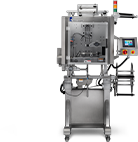

Tamper evidence isn't a nice-to-have anymore. Between tightening FDA and USDA guidance, retailer compliance requirements, and consumers who expect visible proof that a product hasn't been opened, a reliable tamper seal has become table stakes for bottled, jarred, and canned goods. The equipment decision behind that seal, pressure-sensitive versus wraparound labeling machines, has real consequences for line speed, seal integrity, and total cost of ownership.
This guide breaks down how to choose tamper-evident labeling machines that actually hold up on your line, not just on a spec sheet.
What "Tamper-Evident" Actually Requires From Your Labeling Machine
A tamper-evident seal only works if it's applied consistently, every time, across every container on the line. That means the machine, not just the label material, carries a lot of the responsibility. Three things matter most:
- Full or near-full container coverage. Tamper seals typically need to bridge the cap and the neck or shoulder of the container. Partial or crooked coverage creates gaps that defeat the purpose of the seal.
- Consistent tension and placement. Wrinkled, loose, or misaligned labels are easier to remove and reapply without visible damage, which undermines the entire tamper-evident function.
- Compatibility with your container geometry. Round bottles, oval jars, tapered containers, and multi-packs all place different demands on the applicator, which is why choosing an automatic labeling machine for round bottles looks different than sourcing equipment for irregular shapes.
With that baseline in mind, the equipment choice usually comes down to two categories.
Pressure-Sensitive Label Applicators
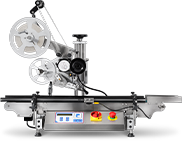
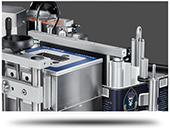
Pressure-sensitive (PS) labeling machines apply pre-cut, self-adhesive labels directly from a roll onto the container. For tamper-evident applications, this typically means a label designed to span the cap-to-container seam, with an adhesive engineered to tear or leave residue if removed. There are several reasons to use pressure-sensitive bottle labels beyond tamper evidence alone, including changeover speed and label material flexibility.
Where pressure-sensitive labeling machines make sense:
- Mixed SKU runs. PS applicators handle quick changeovers well, which matters if you're running multiple container sizes or shapes in the same shift.
- Spot or partial-coverage seals. If your tamper strategy uses a smaller seal label rather than a full wraparound band, pressure-sensitive equipment is usually the more efficient choice.
- Lower to mid-range line speeds. PS systems are generally easier to integrate into existing lines without a full retrofit.
Where they fall short: Pressure-sensitive labels rely heavily on adhesive quality and application pressure. On lines running variable container tolerances or in humid/cold storage environments, PS tamper seals can be more prone to inconsistent adhesion than a full wraparound seal. This is one reason it's worth reviewing what you need to know about a bottle labeling machine before committing to a single application method.
Wraparound Labeling Machines
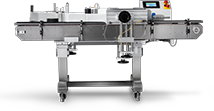
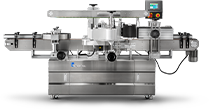
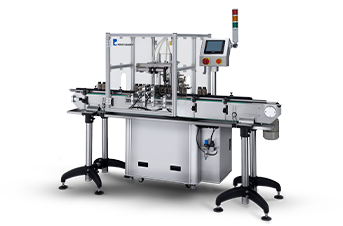
Wraparound labeling machines apply a label, often printed on a continuous web rather than pre-cut, that wraps fully or partially around the container circumference, gluing or adhering the label ends together. For tamper evidence, a wraparound label crossing the cap seam creates a continuous physical barrier that's difficult to remove and reapply cleanly.
Where wraparound labeling machines make sense:
- High-volume, single or limited-SKU production. Wraparound systems are built for speed and consistency at scale, which suits food and beverage producers running long batches.
- Full-body branding plus tamper evidence in one pass. Many wraparound systems combine primary labeling and tamper sealing in a single application, reducing the number of stations on your line.
- Rigid or semi-rigid round containers. Bottles and jars with consistent circumference are ideal candidates for wraparound tooling.
Where they fall short: Wraparound equipment is generally less flexible for frequent changeovers and represents a larger capital investment. It's also less forgiving of container-to-container variance in diameter. Producers scaling output should understand what makes it hard to scale wraparound labeling capacity before sizing equipment for future growth.
Comparing the Two: A Quick Reference
| Factor | Pressure-Sensitive | Wraparound |
|---|---|---|
| Changeover speed | Fast | Slower |
| Best for | Mixed SKUs, spot seals | High-volume, single SKU |
| Capital cost | Lower to moderate | Moderate to higher |
| Seal coverage | Partial (seam-focused) | Full or near-full circumference |
| Tolerance for container variance | Moderate | Lower, needs consistent geometry |
| Typical industries | Specialty foods, nutraceuticals, personal care | Beverage, dairy, mass-market food |
Neither approach is universally "better." The right answer depends on your container mix, run lengths, and how your tamper-evident label integrates with existing branding requirements. If you're moving off manual application altogether, a step-by-step guide to switching from manual to automatic labeling is a useful starting point before you narrow down machine type.
Questions to Ask Before You Buy
When you're evaluating tamper-evident labeling equipment, whether pressure-sensitive or wraparound, bring these questions to the vendor conversation. They overlap closely with the 7 questions to ask packaging machinery manufacturers that apply to any equipment purchase, with a few tamper-specific additions:
- What's the real-world application accuracy at our target line speed? Ask for data from a similar container and label combination, not just the machine's rated top speed.
- How does the machine handle container variance? Even "identical" bottles or jars can vary slightly by mold cavity or supplier lot. Ask how much tolerance the applicator can absorb before seal quality degrades.
- What's the changeover process for different container sizes? Time this in a live demo if possible.
- Can the equipment integrate with our existing labeling or bottling line, or does it require a broader line reconfiguration?
- What tamper-evident label stock is validated for this machine? The applicator and the label material need to be engineered together, and a mismatch is one of the most common causes of seal failure in the field.
- What's the maintenance and changeparts schedule? Tamper-seal applications often run tighter tolerances than standard labeling, which can mean more frequent wear-part replacement.
Getting It Right the First Time
Tamper-evident labeling sits at the intersection of compliance, brand protection, and production efficiency. A machine that runs fast but applies seals inconsistently creates downstream risk, including recalls, retailer chargebacks, and consumer trust issues, that far outweighs any line-speed advantage. The most reliable path is matching your container geometry and volume profile to the right applicator type, validating the label-and-machine combination together, and building in enough tolerance for the day-to-day variability every production line deals with.
Whether your team lands on pressure-sensitive label applicators, wraparound labeling machines, or a combination of both across different product lines, the goal stays the same: a tamper-evident seal that holds up from the filling line to the customer's hands.




.webp?width=360&name=2x-color-logo%20(1).webp "2x-color-logo (1)")