.webp?width=200&height=114&name=2x-Packleader-logo-large%20(1).webp "2x-Packleader-logo-large (1)")


Investing in an automated labeling line isn't a decision you make lightly. It touches your throughput, your changeover times, and ultimately your ability to meet customer demand. Pack Leader USA helps manufacturers evaluate packaging machinery manufacturers so they can choose equipment that fits their operation rather than forcing their operation to fit the equipment.
The questions you ask during the evaluation process will shape how well your new labeling line performs for years to come. Asking the wrong questions leads to equipment that sits idle or creates bottlenecks instead of eliminating them.
This article walks through seven practical questions you should ask any packaging machinery manufacturer before signing a purchase order. These questions focus on integration, support, scalability, and real-world production fit.
Quick guide: 7 questions to ask packaging machinery manufacturers
- Total cost of ownership: What's the actual cost beyond the purchase price?
- Integration compatibility: How does the equipment connect with your existing line?
- Changeover requirements: What's the actual time and complexity for switching between products?
- Technical support structure: Who do you call when something goes wrong?
- Scalability path: Can you add capacity without replacing the whole system?
- Maintenance expectations: What does routine care look like?
- Production environment fit: Does the equipment match your facility's constraints?
How we chose the questions for evaluating packaging machinery manufacturers
These questions come from real conversations with packaging engineers and production managers who have been through the buying process. Some learned what to ask from experience; others learned from expensive mistakes.
The focus areas cover what matters most when you're evaluating labeling equipment for an automated production line:
- Line integration: Your labeling equipment needs to communicate with upstream and downstream equipment without creating gaps in your production flow
- Changeover efficiency: Faster changeovers mean more productive hours and less downtime between product runs
- Support accessibility: When equipment stops, you need someone who understands your specific system to help get it running again
- Growth flexibility: Your production demands will change, and your equipment should adapt without a full replacement
- Maintenance simplicity: Equipment that's hard to maintain creates hidden costs in labor and unplanned downtime
- Facility compatibility: Floor space, power requirements, and environmental conditions all affect what equipment will work in your plant
The 7 questions to ask packaging machinery manufacturers
1. What's the actual cost beyond the purchase price?
The price on a quote sheet rarely tells the full story. Installation, operator training, spare parts inventory, and ongoing service contracts can add significantly to what you'll spend in the first year alone, and some manufacturers structure those costs in ways that aren't obvious until after you've signed.
Ask each manufacturer to walk you through the total cost of ownership over a three-to-five year horizon. A labeling system priced higher upfront may cost less overall if it reduces downtime, requires less outside service, and runs longer before needing major component replacement.
Pack Leader USA's modular design and on-floor parts inventory are built specifically to reduce these downstream costs. Faster lead times mean you're not paying for lost production while waiting on equipment, and support teams with hands-on technical knowledge reduce the labor cost of troubleshooting and repair.
Total cost of ownership question features
- Installation and startup costs: Ask whether commissioning support is included in the purchase price or billed separately, and what your team needs to prepare before equipment arrives
- Parts availability and pricing: Manufacturers who stock common replacement parts reduce both downtime and emergency sourcing costs when components wear out
- Service contract structure: Understand what's covered under warranty, what falls outside it, and whether support escalates to a paid tier for anything beyond basic troubleshooting
Total cost of ownership question pros and cons
Pros:
- Asking about total cost upfront reframes the evaluation from purchase price to long-term value, which usually favors better-built equipment
- Understanding parts and service costs helps you budget accurately for the first few years of operation
- Manufacturers who answer this question in detail have typically worked with customers who asked it after a costly surprise
Cons:
- Total cost projections require assumptions about your production volume and maintenance frequency that may not hold exactly
- Some manufacturers bundle services in ways that make direct cost comparisons difficult
- Calculating true ownership cost takes more time upfront but pays off in avoided surprises
2. How does this equipment integrate with my existing production line?
Integration is where many equipment purchases go sideways. A labeling machine that performs well in isolation might create bottlenecks when connected to your filling or capping equipment.
Ask the manufacturer to explain how their equipment communicates with upstream and downstream systems. You want specifics about conveyor interface points, sensor compatibility, and control system integration.
Integration question features
- Conveyor speed matching: The labeler should handle your line speed without becoming the slowest point in your production flow
- Sensor compatibility: Product detection and positioning systems need to work with your existing sensors or replace them cleanly
- Control system connectivity: Ask whether the equipment uses standard communication protocols your plant already supports
Integration question pros and cons
Pros:
- Asking integration questions upfront prevents costly retrofit projects after installation
- Understanding interface requirements helps you plan electrical and mechanical preparation work
- Manufacturers who can answer integration questions thoroughly usually have experience with similar installations
Cons:
- Integration assessments may require detailed documentation of your existing equipment
- Some manufacturers charge for pre-purchase integration consultations
- Complex integration requirements may limit your equipment options
3. What does a typical changeover look like?
Changeover time eats into your productive hours. If you run multiple SKUs on the same line, the minutes spent switching between products add up quickly.
Ask the manufacturer to walk you through a changeover scenario for your specific products. Get specific numbers: how long does it take to switch from a 4-oz bottle to a 16-oz bottle? What adjustments are mechanical versus software-based?
Changeover question features
- Tool-free adjustments: Equipment that requires wrenches and calibration tools for every changeover adds time and complexity
- Recipe storage: Systems that save product settings let operators recall previous configurations instantly
- Clear adjustment indicators: Visual guides and measurement markings reduce trial-and-error during setup
Changeover question pros and cons
Pros:
- Understanding changeover requirements helps you calculate realistic production schedules
- Fast changeovers mean more flexibility to run smaller batches economically
- Manufacturers who can demonstrate quick changeovers have usually tested their equipment in real production conditions
Cons:
- Changeover times in demonstrations may not reflect your specific product mix
- Some fast-changeover features add to equipment cost
- Operator skill affects real-world changeover times regardless of equipment design
4. How is your technical support structured?
When your labeling line stops, every minute costs money. The support structure a manufacturer offers determines how quickly you get back to production.
Ask who answers the phone when you call for support. Are they technicians who have worked on the equipment, or are they reading from scripts? Find out about parts availability and typical lead times for replacement components.
Support question features
- Technical expertise level: Support teams should include people who have actually built or serviced the equipment you're buying
- Parts inventory: Manufacturers who stock common replacement parts can ship same-day rather than making you wait for fabrication
- Remote diagnostics: Some modern systems allow technicians to troubleshoot remotely, reducing the time between problem identification and resolution
Support question pros and cons
Pros:
- Understanding the support structure before purchase lets you plan for maintenance resources
- Manufacturers with robust support typically have lower long-term ownership costs
- Good support relationships often include preventive maintenance guidance that reduces unplanned downtime
Cons:
- Premium support options may require additional service contracts
- Response times vary based on your location relative to service centers
- Some support structures assume operators have baseline technical knowledge
5. How can this equipment scale with my production growth?
Your production requirements will change. The equipment you buy today should accommodate that growth without requiring a complete replacement.
Ask the manufacturer about upgrade paths. Can you add a second label head? Increase conveyor speed? Handle larger containers? Pack Leader USA's modular design approach specifically addresses this concern, allowing add-on components to expand capability incrementally.
Scalability question features
- Modular expansion options: Systems designed for upgrades let you add capacity without replacing base equipment
- Speed headroom: Equipment rated well above your current needs can handle growth without mechanical changes
- Container range flexibility: Adjustable guides and label applicators that handle a wide range of sizes protect against product line changes
Scalability question pros and cons
Pros:
- Understanding scalability helps you budget for future growth rather than emergency replacements
- Modular systems often have lower total cost of ownership over a five to ten year period
- Scalable equipment reduces the learning curve when you add capability since operators already know the base system
Cons:
- Some scalability features add upfront cost even if you don't use them immediately
- Expansion options may require manufacturer involvement to implement properly
- Not all upgrade paths are cost-effective compared to new equipment at very high volumes
6. What does routine maintenance require?
Maintenance requirements affect your ongoing costs and your team's workload. Equipment that needs constant attention creates hidden expenses beyond the purchase price.
Ask for a detailed maintenance schedule. What needs daily attention? Weekly? What are the expected service intervals for major components? Find out whether your team can handle routine maintenance or whether you'll need outside technicians.
Maintenance question features
- Accessible service points: Equipment designed for maintenance has easy access to wear parts and adjustment points
- Clear documentation: Maintenance manuals should include step-by-step procedures with visual guides
- Predictable wear schedules: Manufacturers should be able to tell you when major components typically need replacement based on operating hours
Maintenance question pros and cons
Pros:
- Understanding maintenance requirements helps you plan staffing and spare parts inventory
- Equipment with simple maintenance keeps your team in control rather than depending on outside service
- Predictable maintenance schedules reduce unplanned downtime
Cons:
- Detailed maintenance information may require a signed NDA or purchase commitment
- Maintenance requirements vary based on your operating environment and production volume
- Some manufacturers recommend maintenance intervals that are more conservative than necessary
7. How well does this equipment fit my production environment?
Every production facility has constraints. Floor space, power availability, environmental conditions, and existing workflow patterns all affect what equipment will work in your plant.
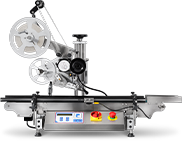
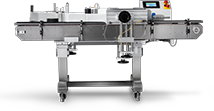
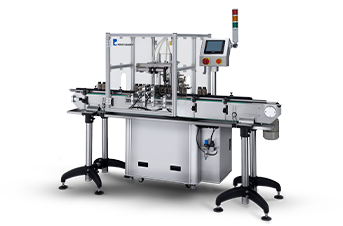
Ask the manufacturer about footprint requirements, electrical specifications, and environmental tolerances. Compact tabletop labelers work well in tight spaces, while fully automatic inline systems need more room but handle higher volumes.
Environment question features
- Footprint documentation: Detailed dimensional drawings let you plan placement before equipment arrives
- Power requirements: Electrical specifications should include not just voltage but also phase requirements and startup current draw
- Environmental ratings: Equipment for washdown environments or temperature-controlled facilities needs appropriate construction
Environment question pros and cons
Pros:
- Understanding environmental requirements prevents installation surprises
- Proper facility planning reduces the time between delivery and production
- Manufacturers who ask detailed questions about your environment usually have experience with diverse installations
Cons:
- Facility assessments may require detailed plant documentation you'll need to prepare
- Some environmental requirements like washdown ratings add to equipment cost
- Unusual facility constraints may limit equipment options significantly
Comparison table: Questions to ask packaging machinery manufacturers
| Evaluation Criteria | Pack Leader USA | Enterprise Systems | Entry-Level Manufacturers |
|---|---|---|---|
| Modular Expansion | ✓ | ✓ | ✗ |
| Same-Day Parts Shipping | ✓ | ✗ | ✗ |
| Technical Support Teams | ✓ | ✓ | ✗ |
| Fast Lead Times | ✓ | ✗ | ✓ |
What happens when you skip the evaluation questions?
Manufacturers who have seen equipment purchases go wrong can usually trace the problem back to skipped evaluation steps. The labeler that seemed perfect in a demonstration creates bottlenecks when connected to real production. The changeover that looked quick in a video takes twice as long with your product mix.
Asking detailed questions upfront costs time but saves money. A thorough evaluation process with packaging machinery manufacturers identifies potential problems before they become expensive fixes.
The manufacturers who answer your questions thoroughly are usually the ones who have worked through similar challenges with other customers. Vague answers or deflections should raise concerns about what you'll experience after the purchase.
How do you compare answers from different manufacturers?
Once you've asked these questions to multiple packaging machinery manufacturers, you'll have data to compare. Create a simple scoring system based on what matters most to your operation.
Weight the criteria according to your priorities. If changeover speed matters more than environmental ratings for your situation, score it accordingly. If maintenance simplicity is critical because you have limited technical staff, prioritize that in your evaluation.
Document the specific answers each manufacturer gives. General statements like "we have excellent support" don't help you compare. Specific details like "our technical team includes three engineers who have worked on this equipment model for over five years" give you something concrete to evaluate.
Why Pack Leader USA is the choice for automated labeling lines
Pack Leader USA approaches equipment differently than enterprise manufacturers or entry-level suppliers. The company's modular design philosophy means you get equipment that fits your current production while leaving room for growth.
The commitment to quality shows in the construction. Stainless steel frames and components built for long-term reliability mean your investment continues to perform year after year.
Pack Leader USA keeps equipment in stock, reducing lead times that delay production improvements. When you're ready to expand capacity, you're not waiting months for custom fabrication. The modular approach lets you add components to existing equipment rather than starting from scratch.
Support comes from teams who understand the equipment technically. When you call with a problem, you're talking to people who have worked on these machines rather than reading from troubleshooting scripts. That difference matters when production is stopped.
Ready to evaluate automated labeling equipment for your production line? Pack Leader USA offers free consultations to help you understand which equipment configuration fits your specific requirements.
FAQs about questions to ask packaging machinery manufacturers
What's the most important question to ask a packaging machinery manufacturer?
Integration compatibility is usually the critical question. Ask how the equipment connects with your existing line. Pack Leader USA designs modular equipment specifically to fit within existing production environments, reducing integration complexity compared to fully custom systems.
How do I evaluate technical support before purchasing?
Ask who handles support calls and what their technical background is. Find out about parts availability and typical response times. Pack Leader USA maintains parts inventory and employs support teams with hands-on equipment experience.
Should I prioritize speed or flexibility in labeling equipment?
The answer depends on your product mix. If you run many SKUs, changeover flexibility often matters more than raw speed. Pack Leader USA's modular systems balance both by allowing quick changeovers while maintaining production speeds up to 131 feet per minute.
How do I know if a manufacturer can support my growth?
Ask about expansion options and upgrade paths. Manufacturers with modular designs like Pack Leader USA allow you to add capability without replacing base equipment. This approach protects your initial investment as production requirements change.
What maintenance questions should I ask before buying?
Request a detailed maintenance schedule including daily, weekly, and interval-based service requirements. Ask whether your team can handle routine maintenance or if you'll need outside technicians. Equipment designed for diverse industries typically has accessible service points and clear documentation.



.webp?width=360&name=2x-color-logo%20(1).webp "2x-color-logo (1)")