.webp?width=200&height=114&name=2x-Packleader-logo-large%20(1).webp "2x-Packleader-logo-large (1)")


Choosing the best automatic labeling method for your business isn’t easy. You need a reliable, efficient solution that will apply professional-looking labels without breaking your budget.
A label machine is more efficient and saves money in the long run. However, hand labeling can seem like an ideal option for smaller businesses with less investment capacity. So, which one is best if you're looking to improve your production line and bottom line?
Since your labeling method can be a major investment, it helps to know the pros and cons of both a labeler machine and hand labeling. If you're stuck between the two, we’ll help you make an informed decision.
Hand Labeling
Most small businesses decide to hand-label their products because they believe a large, bulky labeler isn't worth the initial cost. They think that hand labeling will cut their upfront costs. However, this method is much more time-consuming and could lead to more mistakes compared to a labeler machine.

The Pros
Before completely ruling out hand labeling, it’s important to recognize its advantages. For many small businesses, this approach provides a simple and cost-effective way to start production without major investment or training. Hand labeling gives companies flexibility and control in the early stages of growth, making it a practical first step for low-volume or specialty products.
Here’s why it can be beneficial for some businesses:
- Low Startup Cost: No need to invest in new equipment or installation. You just need labels, containers, and a small team.
- Quick to Start: Ideal for businesses that need to begin production immediately, without setup time or training.
- Simple Process: Easy for any team member to learn and manage, requiring little to no technical experience.
- Flexibility for Small Runs: Works well for limited SKUs, seasonal products, or small-batch production where speed isn’t the main concern.
- Control and Craftsmanship: For boutique brands, hand labeling can add a personal, handcrafted touch that aligns with brand identity.
The Cons
While hand labeling has its benefits, it’s not built for scale. As production grows, what starts as a simple solution can quickly become a time-consuming and costly process. Inconsistent results, wasted materials, and labor-intensive workflows can slow your operation and limit future growth.
Understanding these drawbacks is key to knowing when it’s time to make the switch to automated labeling:
- Low Efficiency: Manual labeling is significantly slower than automated systems, especially as businesses grow.
- Inconsistent Results: Human error leads to crooked or misaligned labels, which negatively impact product presentation.
- Higher Labor Costs Over Time: Paying employees to label by hand adds up quickly as production increases.
- Limited Scalability: As demand and SKUs expand, manual labeling becomes a bottleneck that slows fulfillment.
- Lost Opportunities: Businesses may have to turn down large orders they can’t label fast enough.
- Hidden Long-Term Costs: Waste from labeling errors, rework, and lost productivity can exceed the cost of investing in a labeler machine.
Why Businesses May Choose Hand Labeling
Hand labeling can be a safe option for small business owners with a very limited customer base and product variation. If your business isn’t very large, this option will also allow you to avoid large upfront costs and won’t require any extra specialized equipment. However, if you plan to continue growing your business, you may run into some problems.

You are much more restricted with hand labeling. With a growing business, you may meet those boundaries more quickly and end up with a greater need for optimization. If you find yourself needing more labeling options, flexibility, and efficiency, label machines may be the better option.
When Hand Labeling Makes Sense
While hand labeling has its drawbacks, there are still situations where it makes sense, especially for smaller operations. For startups, limited runs, or businesses still validating their market, hand labeling can be a flexible option to get products on shelves quickly without major investment.
Hand labeling can be a practical, short-term solution when:
- Labeling only a few dozen or a hundred units at a time
- Managing a handful of SKUs
- Running seasonal products or limited edition batches
Hand labeling can also make sense for boutique brands that offer handmade goods. In these cases, the slower pace is more suitable for the brand’s production scale. However, as soon as production begins to ramp up, the same qualities that make hand labeling simple can start holding your operation back.
Label Machines
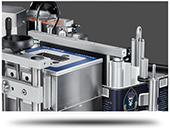
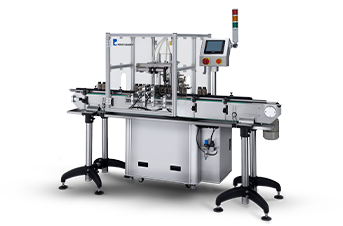
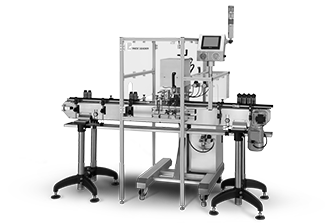
Labeler machines are ideal for larger operations, but small and medium-sized businesses can also benefit from labelers. Labelers come in many different sizes and fulfill many different needs. While it can cost a bit more to get them up and running, they are often a smart investment for growth-oriented companies that need better solutions.

The Pros
Label machines are one of the most effective ways to boost productivity, reduce errors, and maintain consistent quality. Unlike hand labeling, labeling equipment automates repetitive work so your team can focus on higher-value tasks. The right label machine can improve speed, accuracy, and efficiency, while supporting future scalability.
Here’s why many growing businesses choose to invest in a label machine:
- Saves Time and Labor: Labeler machines apply labels faster than manual methods, which allows you to fulfill larger orders with fewer staff.
- Improves Accuracy: Automation ensures labels are placed cleanly and consistently, reducing waste and rework.
- Boosts Efficiency: Features like memory presets and quick-change adjustments minimize downtime and simplify operation.
- Enhances Quality Control: Integrated sensors and systems improve traceability and product identification.
- Fits Any Production Size: Labelers come in compact tabletop options to fully integrated systems. There’s an option to match your space, speed, and budget.
- Supports Scalability: As your production volume increases, automated labeling can easily expand to meet demand without a complete line overhaul.
The Cons
While label machines offer major benefits in speed and consistency, they do come with a couple of considerations that businesses should weigh before investing. The upfront cost, training requirements, and maintenance can make automation feel like a big leap for small business owners.
Understanding these potential challenges helps you plan realistically and maximize your return on investment:
- Higher Upfront Cost: Purchasing automatic labeling equipment requires an initial investment that can feel significant for smaller businesses.
- Training Requirements: Operators need to be trained on setup, operation, and maintenance to use it safely and efficiently
- Maintenance and Upkeep: Like any equipment, labelers require regular servicing and occasional part replacements to maintain peak performance.
- Space Considerations: Larger systems may need more floor space or additional integration with existing production lines.
- ROI Timeline: Depending on production volume, it can take time to fully realize the financial return.
When Labeler Machines Become Necessary
For many new or small businesses, hand labeling may seem like the best and easiest way to get products on shelves. But as production grows, what once felt manageable quickly becomes a daily struggle. More orders mean more hands labeling, more room for mistakes, and more hours spent trying to keep up with demand.
At some point, every growing business hits a tipping point where manual labeling can’t support production goals. It’s not a matter of if that point will come, but when.
Here are some clear signs it’s time to upgrade:
- Rising Production Volumes: You’re labeling hundreds or thousands of units weekly, and your team can’t keep pace.
- More SKUs: Managing multiple label designs or product variations is slowing your process.
- Frequent Errors: Crooked, misplaced, or wrinkled labels are increasing rework and waste.
- Compliance Requirements: You need to accurately place expiration dates, barcodes, or batch codes, which are hard to guarantee manually.
These challenges impact your ability to grow. Every minute spent hand-labeling is time that takes away from focusing on growth. Over time, this imbalance can cost you in labor and lost opportunities.
Labeler machines provide the consistency and speed that allow your team to focus on higher-value work. Once your production reaches this stage, upgrading to automation is a necessary step toward long-term sustainability.
Different Types of Label Machines and When To Use Them
Once your business decides that hand labeling is no longer the best option, you have to determine which automatic labeling equipment fits your products and workflow. Labeler machines come in many styles, each designed for specific container shapes and materials. The right choice depends on what you’re labeling, how fast your line needs to run, and how much flexibility you want to maintain between product types.
Selecting the right equipment can feel overwhelming, but it becomes much simpler when you understand the core categories and how they apply to different product lines.

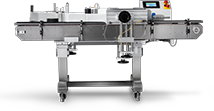
Wrap-Around Labelers
Perfect for round containers like bottles, jars, or cans. Wrap-around systems apply labels smoothly around the product’s full circumference for a clean, uniform look. These are common in the beverage, supplement, and chemical industries.
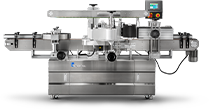
Front and Back Labelers
Ideal for rectangular or oval containers that require labeling on two sides. Front and back labels are widely used for food, beverage, and personal care packaging, where both branding and regulatory information need to be displayed clearly.
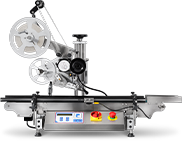
Top and Bottom Labelers
Best for flat surfaces like boxes, trays, or pouches. Top labeler systems are quick to adjust, easy to operate, and a great fit for secondary packaging or branded seals that give products a professional finish.
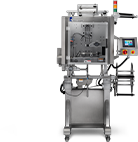
Shrink Sleeve Labelers
Designed for full-body labeling or tamper-evident seals. Shrink sleeve label machines are especially popular in the beverage, cosmetic, and pharmaceutical industries, where packaging must stand out on shelves while also meeting strict compliance requirements.
Investing in the right labeling equipment boosts efficiency and builds a foundation for long-term growth. Whether you need a compact tabletop machine or a fully integrated production system, understanding these categories helps you make an informed choice that fits both your current operation and future vision.
Professional Labeling That Builds Trust and Meets Standards
Your label is usually the first thing a customer notices. That’s why consistency plays such a big role in how your brand is perceived. A crooked or bubbled label can make even the best product look unprofessional.
Automated labeling systems help maintain a polished, consistent appearance across every product. This level of precision enhances your brand image and helps protect compliance. By accurately placing expiration dates, barcodes, and batch codes, label machines reduce the risk of costly errors or regulatory issues.
If traceability and labeling accuracy are non-negotiable in your industry, automated labeling ensures you meet standards and build trust with every unit you produce.
How To Choose Between Hand and Machine Labeling
Deciding whether to keep hand labeling or invest in a labeler machine comes down to budget, time, efficiency, and future plans. The best way to determine what’s right for you is to look closely at your current workflow and where it might be holding you back.

Start by asking yourself a few key questions:
- What’s your current labeling output, and can it keep up with demand?
- How many SKUs do you manage, and how often do you switch between them?
- What are your growth goals for the next 6–12 months?
- How much time or labor do you currently spend on labeling each week?
- Are labeling mistakes affecting your production schedule or customer satisfaction?
If these questions reveal rising labor hours, frequent bottlenecks, or inconsistent labeling, it’s probably time to consider automation. Label machines can immediately reduce manual strain, improve consistency, and prepare your operation for larger orders or new product lines.
You don’t have to automate everything overnight. Many businesses start small with semi-automatic labeling equipment to improve efficiency immediately without requiring major infrastructure changes. As your production grows, these systems can easily integrate into a larger automated setup, giving you the flexibility to scale at your own pace.
Upgrading your labeling process will create space for your business to grow, take on more orders, and compete with confidence.
Find the Labeling Solution That Fits Your Business
Both hand labeling and machine labeling have their place. For small businesses or startups, hand labeling is a simple and affordable way to get started. But as orders grow and consistency becomes more important, manual labeling quickly reaches its limits.
Label machines provide faster production, fewer mistakes, and a professional finish that strengthens your brand’s image. With a wide range of equipment available, it’s easier than ever to find a solution that fits your budget and production scale.
If you’re ready to explore your options, our Practical Guide to Choosing the Right Labeling Equipment can help. This free guide will help you identify the best label machine for your products, so you can move forward with confidence.




.webp?width=360&name=2x-color-logo%20(1).webp "2x-color-logo (1)")