
Packaging lines rarely fail all at once. They fail in small increments: a label that sits crooked, a changeover that takes longer than it should, an operator pulled off another task to babysit a machine that used to run on its own. For food and beverage manufacturers, and for the contract packagers who run product on their behalf, these small increments add up to missed shipments and strained retailer relationships.
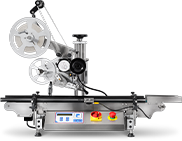
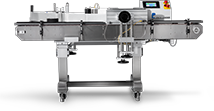
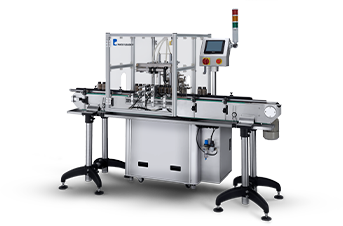
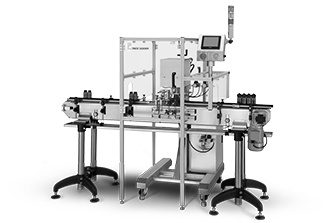
The PL-501 wraparound labeler from Pack Leader USA is built to close that gap. It is designed for beverage, food, and contract packaging lines that need labeling equipment to keep pace with production, not slow it down.
The Real Problem Behind Labeling Downtime
Most production teams do not wake up thinking about labeling equipment. They think about output. Units per minute. On-time shipments. Whether the line will still be running the same way at the end of the shift as it was at the start. When output falls behind demand, it is worth asking why the packaging line can't keep up before assuming the fix is more labor.
Labeling machine downtime rarely shows up as a single dramatic failure. It shows up as:
- Frequent stoppages to adjust label placement
- Long changeover windows between SKUs or container sizes
- Manual rework when labels are applied inconsistently
- Operators spending more time troubleshooting than running product
For food and beverage manufacturers, this matters more than it might for other industries. Retail buyers reject inconsistent packaging. Regulatory labeling requirements leave little room for error. And because the packaging step often runs slower than the actual production of the product, labeling equipment becomes the real ceiling on how much a line can output.
Contract packaging operations feel this pressure even more acutely. When a facility runs multiple client SKUs across a single shift, the equipment has to move between container sizes and label formats without turning every changeover into a fifteen-minute production stall, and changeovers in automatic labeling cost more than most teams account for.
What the PL-501 Does
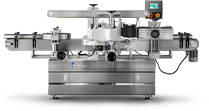
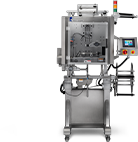
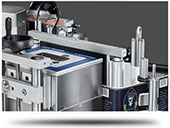
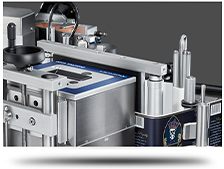
The PL-501 is a wraparound labeling system built for round and near-round containers commonly used across beverage manufacturing and food packaging. It applies pressure-sensitive wraparound labels with consistent placement across production runs, without requiring constant manual correction. For context on why this format matters, see why manufacturers choose an automatic labeling machine for round bottles.
Capability Wraparound label application for round containers, including bottles, jars, and cylindrical packaging formats common in food and beverage production.
Operational explanation The equipment feeds, applies, and wraps labels around the container in a continuous motion, maintaining consistent placement as containers move through the line.
Production outcome Consistent label placement reduces the manual correction and rework that typically slow down packaging lines, supporting more predictable output shift after shift.
Why This Matters for Beverage and Food Manufacturers
Beverage manufacturing lines are judged on consistency. A bottling run that looks slightly different from case to case creates problems long before it reaches a store shelf. Retailers and distributors expect uniform label placement, and inconsistent wraparound labeling is one of the more visible ways a production run can fall short of that expectation.
Food manufacturers face a related but distinct pressure. Labeling accuracy is tied directly to compliance. Ingredient statements, allergen declarations, and lot codes all depend on labels being applied correctly and consistently. Equipment that drifts out of alignment during a run does not just create a cosmetic issue. It creates a compliance exposure. This is part of why finding the perfect automatic labeling machine for food products takes more consideration than picking equipment based on speed alone.
The PL-501 is positioned to address both concerns by keeping label placement consistent across a full production run, rather than requiring operators to make ongoing adjustments to hold quality steady.
Where Contract Packaging and Small Factory Operations Fit
Not every operation running the PL-501 looks the same. Two production environments in particular have distinct labeling needs:
Contract Packaging Facilities
Contract packagers often run multiple client products across a single day, which means the labeling equipment needs to move between formats without extended downtime. For these operations, the priority is equipment that supports faster setup between runs and does not require deep technical expertise to reconfigure. Facilities juggling a wide product mix should also watch for the seven signs a packaging line is inefficient due to too many SKUs.
Small Factory and Mid-Sized Production Lines
Smaller food and beverage manufacturers are frequently caught between two bad options: staying manual and absorbing labor costs and inconsistency, or jumping to full-scale automation that outpaces their actual production volume. Small factory equipment needs to fit the line as it exists today, without requiring a facility to rebuild its entire packaging process around a single piece of equipment. Teams weighing this decision for the first time may find it useful to see what low-cost options don't show you when choosing your first automatic labeling machine.
The PL-501 is designed to sit inside this middle ground: labeling equipment substantial enough to bring consistency and reduced manual handling to a line, without demanding the footprint, complexity, or capital commitment of a fully automated, high-volume system.
| Production Environment | Primary Labeling Concern | How the PL-501 Fits |
|---|---|---|
| Beverage manufacturing | Consistent label placement across high case volumes | Maintains placement accuracy across continuous runs |
| Food manufacturing | Compliance accuracy on ingredient and allergen labeling | Reduces drift and manual correction during runs |
| Contract packaging | Frequent product and container changes | Built for round container formats common across multiple client SKUs |
| Small or mid-sized factories | Right-sized automation without overinvestment | Fits into existing lines without requiring a full line rebuild |
Operational Considerations Before Bringing in a Wraparound Labeler
Production teams evaluating any wraparound labeling equipment, including the PL-501, should think through a few operational realities before making a decision:
Container compatibility Confirm the equipment is suited to the specific container shapes and sizes currently in production, along with any container formats planned for the near future.
Line integration Labeling equipment does not operate in isolation. It needs to fit into the existing line, including infeed and outfeed conveyance, without creating a new bottleneck upstream or downstream. Understanding how modular versus integrated packaging machinery fits a given line is a useful starting point for this conversation.
Operator training and daily use Equipment that requires extensive specialized training to operate adds a hidden labor cost. Evaluate how quickly floor operators can be trained to run and maintain the equipment confidently.
Service and parts availability When labeling equipment goes down, every minute of downtime affects the whole line. Understanding service response time and parts availability in advance matters as much as the equipment's specifications on paper.
Growth headroom Production volume rarely stays flat. Consider whether the equipment can support reasonable increases in volume, or whether it will need to be replaced again as soon as demand grows. Facilities anticipating this ahead of time can look at how to scale wraparound labeling capacity in 2026 for a closer look at what that transition involves.
Common Questions About Wraparound Labeling Equipment
What is a wraparound labeling machine used for?
A wraparound labeling machine applies a label around the circumference of a round or near-round container, commonly used for bottles, jars, and cylindrical packaging in food and beverage production. It is distinct from front-and-back labeling systems, which apply separate labels to flat panel areas of a container.
Is the PL-501 suited for small or mid-sized production lines?
The PL-501 is built to fit into production environments that need reliable, consistent wraparound labeling without the scale or complexity of a fully automated high-volume system. It is a practical fit for small factory equipment needs and mid-sized beverage or food production lines.
How does wraparound labeling reduce downtime compared to manual labeling?
Manual labeling introduces variability, as placement consistency depends on operator technique and fatigue over a shift. Automated wraparound labeling equipment maintains consistent placement across a full run, which reduces the rework and line stoppages associated with manual correction.
Can the PL-501 support contract packaging operations running multiple SKUs?
Contract packaging facilities benefit from labeling equipment that supports efficient movement between container formats. Evaluating changeover requirements for the specific SKUs a facility runs is an important step before implementation, since format ranges vary between operations.
What to Look for Before You Decide
If your team is evaluating wraparound labeling equipment, a few signals typically indicate it is time to move from manual or aging equipment to a system like the PL-501:
- Labeling has become the slowest step in an otherwise capable production line.
- Operators are spending meaningful time each shift on manual label correction.
- Retail or distributor partners have flagged inconsistent packaging.
- Changeovers between products or container sizes are consuming production time that could go toward output.
- Growth in order volume is outpacing what current labeling equipment can reliably support, a pattern covered in why low-cost labeling machines start to limit production as you scale.
None of these signals mean current operations are being run incorrectly. They mean production has reached a point where the labeling step needs to keep up with everything happening around it.
Talk to Pack Leader USA About Your Line
Every production line has its own container formats, SKU mix, and throughput targets. The best way to determine whether the PL-501 is the right fit is to walk through your specific production environment with the Pack Leader USA team, rather than relying on general specifications alone. If labeling is one part of a larger packaging line review, our guide to the best filling and capping systems for mid-sized plants covers the upstream side of the same production challenge.
If labeling has become the constraint holding back your packaging line, it is worth a conversation before it becomes a bigger operational problem.