.webp?width=200&height=114&name=2x-Packleader-logo-large%20(1).webp "2x-Packleader-logo-large (1)")

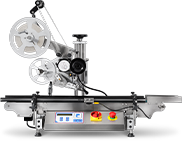
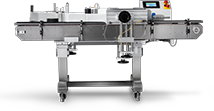
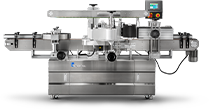
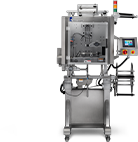
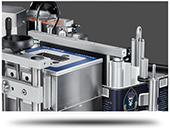
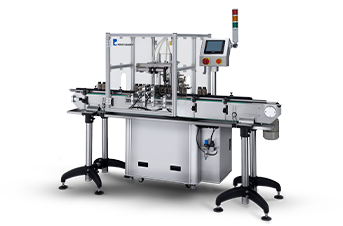
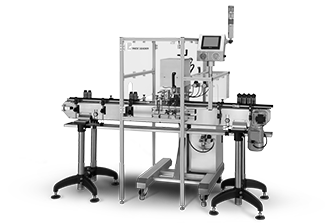

Demand rarely waits for a production line to catch up. A new retail placement, a distributor expansion, or a seasonal spike can push order volume past what a facility was originally built to handle, and packaging is usually the first place that pressure shows up. For plants running wraparound labeling equipment, that pressure tends to concentrate in one spot: wraparound labeling machine capacity.
Wraparound labeling is common on food and beverage lines because it works across a wide range of container shapes and gives brands full-surface real estate for ingredient panels, nutrition facts, and shelf branding. It is also one of the more mechanically involved labeling formats, which means capacity constraints show up differently than they do with simple pressure-sensitive labeling. Film handling, cut-and-place timing, and glue application all have to stay synchronized as speed increases, and any one of them can cap throughput long before the rest of the line is maxed out.
This guide walks through what actually limits wraparound labeling machine capacity, how to evaluate where a line is losing throughput, and what scaling options exist for production managers and packaging engineers who need more output without introducing new bottlenecks.
Why Wraparound Labeling Capacity Becomes a Bottleneck
Wraparound labeling often becomes the ceiling on total line output even when upstream filling and capping equipment could run faster. This happens for a few structural reasons specific to the format.
The labeling cycle has more steps than other label types. A wraparound application involves feeding roll-fed or cut-and-stack label stock, cutting it to length, applying it to the container, and pressing it down as the container passes through. Each step has its own speed ceiling, and the slowest step sets the pace for the whole station.
Container variation adds setup and changeover time. Facilities producing multiple SKUs, sizes, or private-label runs need to reconfigure label length, container guides, and glue settings between runs. Frequent changeovers reduce effective daily capacity even when the rated speed of the equipment looks strong on paper.
Semi-automatic and manual assist steps limit consistency. Many producers scale into wraparound labeling gradually, starting with semi-automatic units that require an operator to place containers or verify label alignment. That labor dependency puts a hard ceiling on throughput regardless of how fast the labeling mechanism itself can run.
Integration gaps create invisible slowdowns. If the labeler is not properly synchronized with infeed conveying or downstream case packing, the line runs at the pace of the weakest connection point rather than the labeler's actual rated speed.
The result is a common pattern: a plant purchases equipment rated for a certain speed, but real-world throughput lands well below that number because of changeover time, manual handling, or integration friction rather than the labeling mechanism itself.
What Determines Wraparound Labeling Machine Capacity
Before scaling capacity, it helps to understand the specific factors that define it. Capacity is not a single number on a spec sheet. It is the combination of several variables working together.
Label Feed and Cut Speed
The mechanism that feeds, cuts, and positions the label sets a hard ceiling on cycle time. Roll-fed systems generally support higher continuous speeds than cut-and-stack systems, but roll-fed formats also require tighter registration control as speed increases.
Container Handling and Spacing
Consistent container spacing through the labeling station matters as much as the labeler's rated speed. Uneven infeed timing, container wobble, or inconsistent orientation forces the line to run slower to avoid misapplication and rework.
Glue Application and Seal Time
Hot melt and cold glue systems each have a minimum dwell time needed for the seal to hold. Pushing speed past that threshold increases the risk of label flagging, loose seams, or seal failure that shows up later in transit.
Changeover Time Between Runs
For plants running multiple container sizes or label formats, the time required to reset guides, label length, and glue settings between runs directly reduces daily effective capacity. A machine rated at a high per-minute speed can still produce low daily output if changeovers eat several hours per shift.
Integration With the Rest of the Line
Capacity is a system-level property, not a machine-level one. A wraparound labeler synchronized with filling, capping, and case packing through a shared control system will sustain higher effective throughput than the same labeler running as an isolated station.
Operational Considerations for Scaling Capacity
Scaling wraparound labeling capacity is not just a matter of buying a faster machine. Several operational factors determine whether added speed actually translates into added output.
Floor space and line layout. Higher-capacity wraparound units, particularly rotary monobloc configurations, often require more floor space and a different infeed and outfeed layout than a linear semi-automatic unit. Facilities with tight floor space need to evaluate footprint before committing to a specific configuration.
Labor allocation. Moving from a semi-automatic unit that requires operator placement to an inline automatic system changes labor needs on the floor. This is usually a net reduction in headcount per unit produced, but it also changes the skill profile needed to run and maintain the equipment.
Upstream and downstream compatibility. A labeler that outperforms the filler or capper upstream of it does not add real capacity. Capacity planning should map the entire line, not just the labeling station, to identify where the next bottleneck will appear once labeling is no longer the constraint.
Product and container variability. Facilities running a wide range of container shapes or frequent private-label changeovers need equipment that supports fast reconfiguration, not just high top-end speed. In these environments, changeover time often has a bigger impact on daily output than the labeler's maximum rated speed.
Reliability under sustained runs. A labeler that hits high speeds during a demo but jams or drifts out of registration during long production runs does not deliver real capacity gains. Sustained performance across full shifts matters more than peak speed numbers.
Options for Scaling Wraparound Labeling Capacity
There is more than one way to increase wraparound labeling machine capacity, and the right approach depends on current line configuration, SKU variety, and growth trajectory.
| Approach | Best Fit | Tradeoffs |
|---|---|---|
| Upgrade from semi-automatic to inline automatic | Plants outgrowing manual placement and needing consistent throughput | Higher upfront investment, requires operator training on new controls |
| Move to rotary monobloc configuration | High-volume single or limited-SKU production needing maximum sustained speed | Larger footprint, less changeover flexibility for high SKU variety |
| Add a modular integrated labeling station | Plants that need to scale incrementally without a full line rebuild | Requires compatibility planning with existing filling and capping equipment |
| Improve line integration and controls | Facilities where the labeler already outperforms the rest of the line | Does not increase labeler speed itself, only unlocks existing rated capacity |
| Reduce changeover time through tooling and format standardization | High-SKU environments losing capacity to frequent resets | Requires upfront engineering time to standardize formats across SKUs |
Each of these paths addresses a different constraint. A plant losing capacity to changeovers will not solve the problem by installing a faster labeler if the new equipment still requires the same manual reset process. Similarly, a plant limited by manual container placement will not gain much from tooling changes alone. Matching the scaling approach to the actual constraint is what separates a capacity upgrade that works from one that simply moves the bottleneck.
Common Questions About Scaling Wraparound Labeling Capacity
What makes it hard to scale wraparound labeling machine capacity?
Wraparound labeling combines several mechanical steps, label feed, cutting, application, and glue seal, that all have to stay synchronized as speed increases. Capacity is also affected by factors outside the labeler itself, including container spacing, changeover time, and how well the labeler is integrated with the rest of the line. Scaling capacity requires addressing whichever of these factors is the actual constraint, not just increasing the machine's top rated speed.
How do I know if my wraparound labeler is the actual bottleneck?
Compare the labeler's rated speed to the actual sustained output of the line over a full shift. If filling and capping equipment are running below their rated capacity while waiting on the labeling station, or if operators are manually staging containers before or after labeling, the labeler is likely the constraint. If the labeler runs at full speed but the line still lags, the bottleneck may be downstream in case packing or palletizing.
Can I increase wraparound labeling capacity without replacing the whole line?
In many cases, yes. Reducing changeover time through standardized tooling, improving infeed conveying to stabilize container spacing, or adding a modular labeling station alongside existing equipment can increase effective capacity without a full line rebuild. A full replacement is typically necessary only when the current equipment's mechanical speed ceiling, not surrounding process factors, is the limiting variable.
What is the difference between semi-automatic and inline automatic wraparound labeling for capacity purposes?
Semi-automatic units depend on an operator to place or align containers, which caps throughput at a human-paced rate regardless of the labeler's mechanical speed. Inline automatic systems handle container feeding and alignment mechanically, removing that labor dependency and allowing throughput to scale closer to the equipment's rated speed. The right choice depends on current volume and whether labor availability is a constraint on the line.
Does higher labeling speed always mean higher production capacity?
Not necessarily. Speed increases only translate into capacity gains if upstream and downstream equipment can support the higher pace and if changeover time does not offset the gains. A labeler capable of running faster than the rest of the line will not increase total output until the surrounding process is upgraded to match.
Signals It Is Time to Evaluate Your Labeling Setup
A few operational patterns tend to indicate that current wraparound labeling capacity has become a real constraint on growth rather than a temporary inconvenience:
- Filling and capping equipment consistently sit idle waiting on the labeling station
- Operators are manually staging or verifying containers before or after labeling
- Changeovers between SKUs are consuming a significant share of available shift time
- Order volume increases are being met with overtime rather than added throughput
- Label misapplication or seal failures increase as line speed is pushed higher
If more than one of these is showing up regularly, it is worth mapping the full line to confirm where the actual constraint sits before deciding whether the fix is a labeling equipment upgrade, an integration change, or a changeover process improvement.
Planning the Next Step
Scaling wraparound labeling machine capacity is rarely about chasing a higher top speed number. It is about identifying which part of the labeling process, mechanical speed, container handling, changeover time, or line integration, is actually limiting output, and addressing that specific constraint. Plants that scale successfully tend to start with a clear picture of where the line is losing time, then match the equipment or process change to that specific gap rather than defaulting to a full replacement.
For production managers and packaging engineers evaluating next steps, the most useful starting point is a shift-level audit of actual throughput against rated capacity across every station on the line, not just the labeler. That comparison usually makes the real constraint clear, and it puts any equipment decision on solid operational ground rather than a spec sheet estimate.




.webp?width=360&name=2x-color-logo%20(1).webp "2x-color-logo (1)")