.webp?width=200&height=114&name=2x-Packleader-logo-large%20(1).webp "2x-Packleader-logo-large (1)")


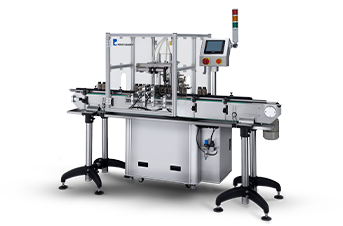
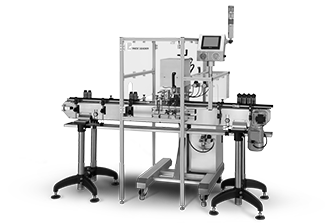
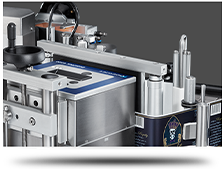

Pressure-sensitive labeling is one of the last steps in pharmaceutical packaging, but it carries some of the highest risk. A misapplied label on a blister pack is not a cosmetic issue. It is a potential deviation, a documentation gap, and, in the worst case, a product identity problem that can trigger a recall.
As pharmaceutical manufacturers push more SKUs through the same validated lines, label applicator problems are becoming a more frequent source of line stoppages and quality events. This guide walks through how to recognize the warning signs of pharmaceutical pressure-sensitive label applicator problems, what typically causes them, and how to tell the difference between a quick fix and a sign that your labeling process needs a closer look.
Why Label Application Problems Carry More Weight in Pharma
In most industries, a crooked label is a minor annoyance. In a GMP environment, it is different.
Labels on blister packs and cartons carry dosage information, lot numbers, expiration dates, and identifying details that are part of the regulated production record. When a label is misapplied, wrinkled, skewed, or missing entirely, the consequences extend beyond the line:
- Quality teams have to open a deviation
- Batch records need review before release
- Operations has to explain the downtime and root cause
- In serious cases, product may be held, reworked, or scrapped
This is why label applicator jams and misapplied labels deserve a structured diagnostic approach rather than a quick reset-and-restart response. A pattern of small labeling issues is often the first visible sign of a larger process or equipment problem.
Common Symptoms of Label Applicator Problems
Before you can diagnose the root cause, it helps to name what you are actually seeing on the line. Most pharmaceutical packaging teams describe one or more of these patterns:
- Labels applied at an angle or off-center on the blister card
- Wrinkled, bubbled, or partially adhered labels
- Repeated applicator jams that require operator intervention
- Labels applied twice, or skipped entirely on certain units
- Inconsistent label placement between shifts or operators
- Increased downtime during changeovers to a new SKU or label stock
Any one of these on its own might be a one-off. If you are seeing the same symptom repeat across multiple batches, that is a signal to move from "fix it and move on" to "diagnose it properly."
Root Causes Behind Misapplied Labels and Applicator Jams
Most pharmaceutical pressure-sensitive label applicator problems trace back to one of a few categories. The table below breaks down the most common causes by symptom.
| Symptom | Likely Root Cause | Why It Happens |
|---|---|---|
| Labels applied off-center or skewed | Sensor or photo-eye misalignment | The applicator loses accurate registration on the blister card edge |
| Repeated jams at the same point in the cycle | Web tension inconsistency | Loose or overtightened label web causes feed disruption |
| Wrinkled or bubbled labels | Adhesive or backing stock issues | Label stock reacts poorly to line speed, temperature, or humidity |
| Labels not adhering fully | Surface irregularities on blister packaging | Foil or film variation affects adhesion at the point of contact |
| Inconsistent placement across shifts | Manual setup or calibration drift | Applicator settings are not locked down or documented per SKU |
| Jams increasing after changeover | Incomplete recalibration for new label size or product | Applicator was not fully requalified for the new run parameters |
Static buildup, label liner residue, and worn applicator components also contribute to intermittent jams, particularly on lines that run high SKU variation or that have not had preventive maintenance scheduled around actual run hours rather than a fixed calendar.
Operational Considerations in a Validated Environment
Diagnosing labeling problems on a pharmaceutical packaging line is not the same as diagnosing them on a general consumer goods line. A few operational realities shape how teams need to approach this:
Documentation matters as much as the fix. Every adjustment made to an applicator, whether it is a sensor recalibration or a tension setting change, needs to be traceable. If your team cannot explain what changed and why, that gap becomes a bigger problem than the original jam.
Changeovers are a common trigger point. Pharmaceutical packaging lines often run multiple SKUs, dosage forms, and blister configurations. Each changeover introduces a moment where applicator settings, label stock, and sensor calibration all need to be re-verified. Rushed changeovers are one of the most common sources of misapplied labels in the days that follow.
Validation status limits how quickly equipment can change. Operations and engineering teams cannot simply swap components or adjust process parameters without considering IQ/OQ/PQ implications. This is part of why root cause diagnosis matters more here than in less regulated environments. A quick workaround that has not been evaluated against the validated process can create compliance exposure that outweighs the original downtime.
Quality holds veto power. Even when operations identifies a likely cause, quality and regulatory teams need to sign off before a permanent process or equipment change is made. Diagnostic clarity speeds this up. Vague explanations slow it down.
Applicator Jams vs. Misapplication: Different Problems, Different Fixes
It is worth separating these two issues, because teams sometimes treat them as the same problem when they are not.
Applicator jams are mechanical or feed-related interruptions. The label web stops moving correctly, the applicator head cannot cycle, or material backs up in the feed path. These tend to trace back to tension, sensor calibration, or worn mechanical components that low-cost equipment struggles to hold within tolerance.
Misapplied labels are placement or adhesion failures. The applicator runs, but the label lands wrong, adheres poorly, or is skipped. These tend to trace back to registration accuracy, surface consistency on the blister pack, or label stock quality.
A line can have one problem without the other. Understanding which one you are actually dealing with narrows the diagnostic path considerably and prevents teams from replacing parts or adjusting settings that were never the issue.
Common Questions About Pharmaceutical Label Applicator Problems
What causes pressure-sensitive labels to misapply on blister packs? Misapplication is most often caused by sensor or registration misalignment, inconsistent blister pack surface conditions, or label stock that is not well matched to line speed and environmental conditions.
Why do label applicators jam more often after a changeover? Changeovers introduce new label dimensions, adhesive types, or product surfaces. If calibration and tension settings are not fully re-verified for the new run, the applicator is more likely to jam within the first several cycles.
Is a labeling issue always a quality event in pharmaceutical packaging? Not always, but it should always be evaluated as one until ruled out. Because labels carry dosage and identification information, even a minor placement issue needs to be assessed against your deviation and batch record procedures.
Can environmental conditions affect label application accuracy? Yes. Temperature and humidity swings affect adhesive performance and label stock behavior, particularly with certain film and foil combinations used in blister packaging.
Signs It Is Time to Evaluate Your Labeling Equipment
A repeated symptom is a signal, but repeated symptoms with no clear root cause are a stronger one. Consider a closer equipment evaluation when:
- The same jam or misapplication pattern recurs across multiple batches despite recalibration
- Changeovers consistently produce labeling issues in the first production run
- Maintenance logs show increasing frequency of applicator intervention over time
- Operators report inconsistent behavior between shifts on the same settings
- Deviation reports related to labeling are trending upward quarter over quarter
These patterns usually point to equipment reaching the edge of what it can reliably handle across your current SKU mix, rather than a single fixable setting.
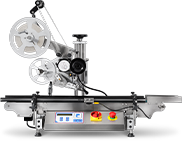
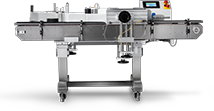
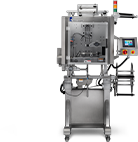
Pack Leader USA labeling systems are built to maintain consistent registration and label placement across validated production environments, which reduces the manual recalibration burden that often introduces variability between runs. For teams evaluating whether their current applicator setup can keep pace with growing SKU complexity, that consistency is often the difference between an isolated incident and a recurring quality concern.
Building a Diagnostic Routine Before the Next Batch Run
The teams that manage labeling issues well are not the ones who never see a jam. They are the ones who have a consistent way of identifying what changed, documenting it, and confirming the fix before the next batch starts.
Start by separating jam symptoms from misapplication symptoms, then trace each back to the categories above: registration, tension, surface consistency, or stock quality. Keep a simple log tied to SKU and changeover date so patterns become visible instead of anecdotal.
If the pattern keeps returning despite documented fixes, that is the point to bring engineering and quality into a broader equipment review rather than continuing to treat each incident as isolated.



.webp?width=360&name=2x-color-logo%20(1).webp "2x-color-logo (1)")