.webp?width=200&height=114&name=2x-Packleader-logo-large%20(1).webp "2x-Packleader-logo-large (1)")


Food and beverage manufacturers rarely go looking for a "labeling solution" until labeling has already become a problem. A retailer rejects a pallet over an inconsistent barcode. An allergen statement gets missed during a fast changeover. A production run gets held because the date code printer cannot keep pace with the filler. At that point, the question is no longer abstract. It is: what actually solves this, and what does it cost to fix?
This guide breaks down what a food and beverage labeling solution includes, where the real risk sits on a production line, and how to evaluate labeling equipment against the operational realities of a growing plant. The considerations below apply broadly across the category, though certain segments, such as craft brewing and wine production, carry their own label material and container requirements worth planning around separately.
What Is a Food and Beverage Labeling Solution?
A food and beverage labeling solution is the combination of software, hardware, and processes a manufacturer uses to apply accurate, compliant, and repeatable labels to products moving through a production line. A complete solution typically includes four layers:
- Label design and management software that stores approved templates, controls version changes, and keeps formatting consistent across products and plants.
- ERP or production system integration that keeps ingredient, allergen, and lot data synced between the recipe and the label.
- Quality control and inspection that catches barcode, spelling, or nutritional panel errors before they reach a customer.
- Labeling equipment that physically applies primary, secondary, and case-level labels at production speed.
Most published guidance on this topic focuses heavily on the software and ERP layer. That layer matters, but it does not solve the problem on its own. Software can generate a perfect label file and a plant can still miss its labeling requirements if the equipment applying that label cannot keep pace with the line, cannot handle changeovers between SKUs, or applies labels inconsistently. For most mid-sized food and beverage producers, the labeling equipment layer is where the actual operational risk lives, and it is the layer least discussed in generic buying guides.
Why Labeling Becomes the Bottleneck
Food and beverage production lines are usually built up in stages. A producer starts with manual or semi-automatic filling and labeling, then adds automation as volume grows. This creates a common pattern: the filler and capper get upgraded first, and labeling is left running at its original speed and its original level of manual involvement.
The result is a line that can fill and cap faster than it can label. A few operational pressures make this worse:
- SKU proliferation. More container sizes, more private label variations, and more seasonal packaging mean more label changeovers per shift.
- Retail and distributor requirements. Retailers increasingly reject inconsistent barcodes, off-center labels, or damaged case labels, which turns a labeling problem into a fulfillment problem.
- Regulatory pressure. FDA and USDA labeling requirements, allergen disclosure rules, and lot or date coding for FSMA traceability all raise the cost of a labeling mistake.
- Labor dependency. Hand-labeling or manual label application does not scale evenly. As volume increases, so does the labor needed to keep pace, and so does the variability in label placement.
None of these pressures are solved by better label design software alone. They are solved by equipment built to run accurately at production speed, and adapt when the product or packaging changes.
Core Regulatory Drivers Behind Labeling Requirements
Before comparing equipment, it helps to understand what a labeling solution actually needs to support on the compliance side:
- FDA and USDA compliance. Statement of identity, net quantity, nutrition facts, and descending-weight ingredient declarations must appear accurately on every unit.
- Allergen and dietary disclosures. Major allergens, gluten-free claims, and bioengineered food disclosures need to be applied consistently, including during private label or co-pack changeovers.
- Traceability and date coding. Lot codes, "best by" dates, and batch information support Food Safety Modernization Act (FSMA) traceability and reduce recall exposure if a problem is identified after distribution.
- GS1-compliant barcoding. Primary, secondary, and pallet-level barcodes need to scan correctly the first time, since scan failures at a distribution center create chargebacks and delays.
These requirements do not change based on plant size. A ten-person co-packer and a two-hundred-person manufacturer are held to the same labeling accuracy standard. What changes is how much manual oversight a smaller operation can realistically apply to catch mistakes before they leave the plant, which is exactly why equipment reliability matters as much as software accuracy.
Comparing Labeling Equipment Types
Not every production line needs the same labeling equipment. The right fit depends on container shape, run volume, changeover frequency, and how many labels need to go on a single product.
| Equipment Type | Best Fit | Tradeoffs |
|---|---|---|
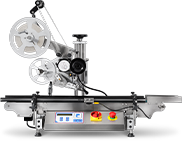
| Semi-automatic tabletop labelers | Lower-volume runs, frequent product changes, growing operations moving off hand-labeling | Requires an operator to feed containers; lower throughput ceiling |
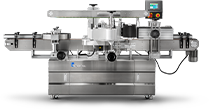
| Front and back labelers | Bottles and containers needing labels on two sides in a single pass | Best suited to consistent container shapes; less flexible for irregular packaging |
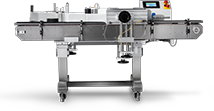
| Wrap-around labelers | Round containers such as bottles, jars, and cans needing a full 360-degree label | Label registration accuracy becomes more important at higher speeds |
| Top and bottom labelers | Products needing labeling on flat upper and lower surfaces, such as trays or cartons | Typically paired with other labeler types for full coverage |
| Print and apply labeling systems | High-SKU environments needing variable data such as lot codes, dates, or barcodes printed and applied in real time | Higher upfront investment; strongest fit when traceability and GS1 compliance are a priority |
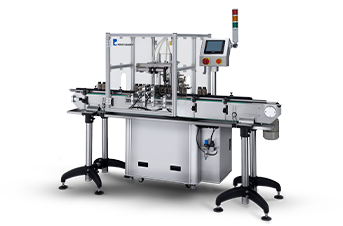
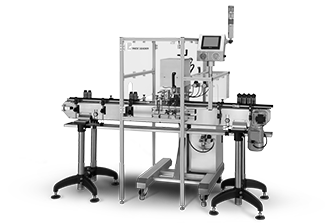
| Fully integrated inline systems | High-volume lines running many hours per day with limited tolerance for downtime | Requires more floor space and planning during installation |
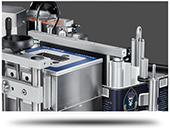
For most mid-sized food and beverage producers, the practical path is not choosing one equipment type but sequencing the right one for the current stage of growth. A hand labeling or label machine comparison is often the first decision point. Many producers start with an ELF tabletop labeler to move off hand-labeling, then move toward a wrap-around labeling system, front and back labeler, or top and bottom labeler as volume, container variety, and SKU count increase. For higher-throughput lines, a horizontal labeling system is typically the next step once manual feeding becomes the bottleneck.
Where Software and Equipment Need to Work Together
A labeling solution is strongest when the software and the equipment are not treated as separate purchases. Label management software controls what the label says. The equipment controls whether that label gets applied accurately, at speed, and without slowing down the rest of the line. A few integration points matter most in practice:
- Variable data printing. Lot numbers, dates, and barcodes generated by the software need to print and apply cleanly without manual intervention. This is where food date label printers matter as much as the label design itself, whether that means a thermal transfer print head or a hot stamp printer built for high-speed date and lot coding.
- Label material and adhesive selection. Even a technically correct label can fail on the line if the adhesive is not matched to the container and environment, particularly for cold storage or condensation-prone products.
- Print quality and registration. High-quality label application reduces the rate of misprints, skewed labels, and barcode scan failures that create rework, and the benefits compound when registration accuracy is built into the equipment rather than corrected by hand.
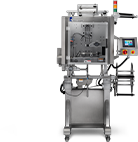
- Shrink sleeve and specialty labels. Some products, especially in craft beverage and specialty food, require shrink sleeve application that behaves differently from pressure-sensitive labeling and needs equipment built for that format.
Signals It Is Time to Evaluate Your Labeling Equipment
A few operational signals tend to show up before a labeling problem becomes a compliance or retail issue:
- Changeovers between SKUs are taking longer than the rest of the line's changeover time.
- Operators are hand-applying labels on a line that runs everything else automatically.
- Label placement accuracy varies noticeably between shifts or operators.
- Barcode scan failures or retailer chargebacks are increasing.
- Adding a new container size or private label SKU requires significant manual workaround.
If two or more of these are already happening, the labeling stage of the line has likely become the actual constraint on production capacity, even if it does not look that way on paper.
Common Questions About Food and Beverage Labeling Solutions
Do I need labeling software, labeling equipment, or both? Most food and beverage manufacturers need both, but the priority depends on where the current risk sits. If label content, allergen accuracy, or template control is the issue, software solves that. If labels are being applied inconsistently, slowly, or by hand at production speed, equipment is the constraint that needs to be addressed first.
What labeling equipment works best for craft beverage or small-batch food producers? Semi-automatic tabletop labelers are typically the right starting point for lower-volume, high-SKU-variation production, with a move toward automatic wrap-around or front-and-back labelers as volume increases and changeovers become more frequent.
How does labeling equipment support FDA and allergen compliance? Equipment supports compliance by applying the correct, current label version accurately and consistently, without relying on manual placement that introduces variation between units, shifts, or operators.
Can labeling equipment integrate with existing ERP or label design software? Yes. Most modern labeling equipment is designed to receive print and apply instructions, including variable data such as lot codes and dates, directly from label management or ERP systems, so the equipment applies whatever the software generates without a manual handoff step.
What is the difference between print and apply labeling and standard labeling equipment? Standard labeling equipment applies pre-printed labels. Print and apply systems generate the label, often including variable data such as a date code or barcode, and apply it in the same step, which reduces the chance of applying an outdated or incorrect label.
Deciding What Fits Your Line
The right food and beverage labeling solution is the one that matches your current production reality, not the most advanced option available. A ten-container-per-minute craft producer and a two-hundred-container-per-minute co-packer are solving the same compliance problem with very different equipment needs.
If labeling has started to look like the reason your line cannot run faster, that is usually the clearest sign the equipment layer, not just the software layer, deserves a closer look. Pack Leader USA's food and beverage labeling equipment guide walks through equipment options in more detail, and our team can help map a labeling setup to your current line and growth plans.




.webp?width=360&name=2x-color-logo%20(1).webp "2x-color-logo (1)")