.webp?width=200&height=114&name=2x-Packleader-logo-large%20(1).webp "2x-Packleader-logo-large (1)")

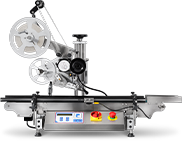
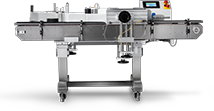
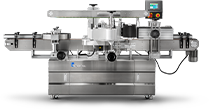
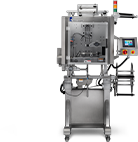
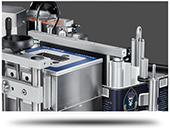
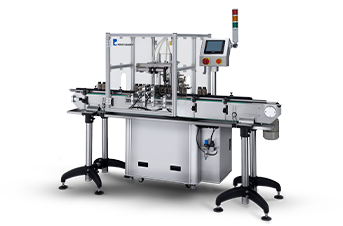

In chemical and cleaner manufacturing, it feels like a straightforward equation. More SKUs show up, changeovers increase, and the answer becomes obvious: automate labeling. That assumption shows up in production meetings, capital planning conversations, and vendor discussions as if it is a proven rule. When packaging line efficiency starts to slip or labor becomes harder to manage, an automatic labeling machine often feels like the next logical step. It seems like a clean upgrade from manual labeling to labeling automation, especially when the pressure to scale output is constant.
But that assumption is where a lot of operations teams get into trouble. Automatic labeling equipment can absolutely improve throughput, reduce manual handling, and stabilize production when it is applied correctly within a packaging line. At the same time, it can introduce new bottlenecks, increase downtime, and create more complexity if it is not aligned to how your labeling process actually runs. In SKU-heavy environments, the difference between success and frustration comes down to fit, not the presence of automation itself.
Myth: Automatic Labeling Machines Solve SKU Complexity on Their Own
The common thinking sounds simple and convincing. Manual labeling is slowing things down, changeovers are increasing, and labor is getting harder to manage, so labeling automation should solve the issue. On the surface, that logic makes sense because automatic labeling machines are associated with speed and consistency. It is easy to believe that replacing manual labeling with an automatic labeling machine will naturally improve packaging efficiency across all products. This belief becomes even stronger when teams are under pressure to increase output without increasing headcount.
The problem is that this logic ignores how SKU-heavy environments actually behave. In household and chemical production, SKU growth is not just a volume issue, it is a variability issue. Every new container size, label type, or product variation adds complexity to the system and increases the number of adjustments required to keep the line running. If the labeling equipment cannot absorb that variability, automation does not eliminate the problem, it simply relocates it to another part of the process. That is where many efficiency expectations start to fall apart.
Reality: Packaging Efficiency Depends on Equipment Fit, Not Just Automation
Automatic labeling equipment improves efficiency only when it matches the realities of the production environment. It is not enough for an automatic labeling machine to run fast in a controlled setting or during a demo. It has to perform consistently across the full range of products, containers, and production conditions that exist on the packaging line. This is where many assumptions about labeling automation begin to break down in real operations.
Efficiency is not created by speed alone, it is created by reducing friction across the entire production cycle. That includes setup time, labeling machine changeover time, operator involvement, and consistency between runs. When labeling equipment aligns with these factors, it can significantly improve output and stability. When it does not, it often adds complexity that teams have to work around instead of benefiting from.
| Factor | What Most Teams Focus On | What Actually Drives Efficiency |
|---|---|---|
| Speed | Maximum bottles per minute | Consistent throughput across SKUs |
| Automation | Level of automation | Reduction in operator intervention |
| Equipment | Standalone performance | Full packaging line integration |
| Setup | Initial setup time | Changeover speed and repeatability |
1. Your Changeover Frequency
In SKU-heavy environments, production time is not just about how fast the line runs when it is operating. It is about how often the line stops and how long it takes to get back up to speed. Frequent changeovers reduce available production hours and introduce more opportunities for setup errors and inconsistencies. This means that even high-speed labeling equipment can underperform if it cannot transition efficiently between runs.
If your automatic labeling machine requires manual adjustments, complex setup steps, or operator-dependent calibration, every changeover becomes a disruption. Instead of improving efficiency, the equipment slows the operation down during transitions and increases reliance on experienced operators. Over time, this erodes the gains that automation was supposed to deliver and makes production feel less predictable.
2. Your Product and Container Variability
Chemical and cleaner packaging lines rarely operate with uniform containers or labels. Instead, they deal with different bottle sizes and shapes, varying label materials, and multiple SKU formats driven by retailers and private label requirements. This variability is not occasional, it is constant, and it defines how the line operates day to day. Any labeling equipment introduced into this environment has to handle that variation without constant intervention.
If labeling equipment is optimized for a narrow set of conditions, it may perform well on a single SKU but struggle across the rest. This leads to inconsistent label placement, longer setup times, and more frequent adjustments during production. Operators end up compensating for the equipment instead of relying on it, which increases labor involvement and reduces overall efficiency. In this case, automation does not simplify operations, it complicates them.
3. Your Line Integration
Labeling equipment does not operate as a standalone system. It is part of a broader packaging line that includes filling, capping, and downstream handling. If the labeling system cannot match the pace or rhythm of the rest of the line, it becomes the limiting factor in production. This is one of the most common issues seen when an automatic labeling machine is added without considering full packaging line integration.
Operations teams often evaluate labeling equipment based on maximum speed, but real output is determined by how well each part of the line works together. If the filler runs faster than the labeler, or if the labeling system cannot maintain consistent throughput, the entire line slows down. Operators step in to manage flow, adjust settings, or resolve issues, which increases intervention instead of reducing it. In these situations, automation introduces imbalance instead of efficiency.
When Automatic Labeling Equipment Actually Improves Efficiency
Automatic labeling equipment delivers real efficiency gains when it is designed to handle the realities of multi-SKU production. This includes flexible labeling equipment that can adapt to different container types, repeatable setup processes, and consistent performance across runs. Equipment that can handle multiple products without constant adjustment allows the line to operate more smoothly and predictably. That is where automation begins to provide measurable value.
The most effective systems are not just fast, they are stable. They reduce the need for constant operator involvement and allow production to run consistently across different SKUs. When operators trust the equipment to perform without frequent intervention, the line becomes easier to manage and less prone to disruption. That is when automation starts to deliver the efficiency gains it promises.
The Hidden Risk: When Automatic Labeling Machines Add Complexity Instead of Efficiency
Many operations teams invest in automatic labeling machines expecting immediate improvements in speed, labor reduction, and overall packaging efficiency. These expectations are not unrealistic, but they depend heavily on how well the labeling system fits the production environment. When that fit is missing, the results can be the opposite of what was intended. Instead of simplifying operations, the system introduces new challenges that were not present before.
| Expectation | What Actually Happens |
|---|---|
| Faster production | Slower changeovers |
| Less labor | More operator intervention |
| Consistent output | SKU-based inconsistency |
| Smooth scaling | Increased complexity |
This often shows up as longer changeovers, more frequent adjustments, and inconsistent performance across different SKUs. Equipment that was designed for speed but not variability struggles to keep up with real production demands. Operators spend more time troubleshooting and making corrections, which increases downtime and reduces output. In these cases, automation becomes another layer of complexity rather than a solution.
Why This Misconception Persists
The belief that automation always improves efficiency continues because it is supported by simple and visible metrics. Labeling machine speed is easy to measure and compare, which makes it a common focus during equipment evaluation. Vendors highlight units per minute because it provides a clear benchmark, even though it does not reflect full packaging line performance. This creates a narrow view of what efficiency actually means.
At the same time, variability and labeling machine changeover performance are harder to evaluate and often receive less attention. Teams under pressure to scale may prioritize quick decisions and focus on obvious improvements rather than deeper operational fit. Manual labeling also feels unsustainable, which makes any level of labeling automation seem like progress. These factors combine to reinforce the assumption, even when real-world results do not match expectations.
How to Evaluate an Automatic Labeling Machine for Real Production Efficiency
A more effective approach is to shift the focus away from speed alone and toward overall production stability. Instead of asking whether an automatic labeling machine will increase output, it is more useful to evaluate whether it will reduce friction across all SKUs. This includes looking at changeover time, consistency between runs, and the level of operator involvement required to maintain performance. These factors have a larger impact on packaging efficiency than peak speed alone.
When evaluating labeling equipment, prioritize:
- Changeover time between SKUs
- Ease of adjustment for different containers
- Integration with your existing packaging line
- Consistency across multiple products
- Level of operator involvement required
This perspective aligns with how experienced operations leaders evaluate equipment decisions. They are not looking for features or theoretical performance, they are looking for systems that run reliably in real production conditions. They want labeling equipment that integrates cleanly, handles variability, and reduces the need for constant oversight.
Signals It Is Time to Rethink Your Approach
There are clear signs that the issue is not a lack of automation, but a mismatch between equipment and SKU complexity. These patterns tend to show up consistently across packaging operations dealing with SKU growth. Changeovers start consuming more time, certain products slow the line down, and labeling performance becomes inconsistent between runs. Operators become more involved in adjustments, and output becomes less predictable across shifts.
When multiple of these issues appear together, they point to a system that is not designed for the level of variability it is handling. The problem is not isolated to one piece of equipment or one process. It reflects a broader misalignment between production demands and system capability. Recognizing these patterns is the first step toward making more effective equipment decisions.
What Actually Determines Labeling Efficiency in SKU-Heavy Operations
Automatic labeling equipment does not automatically improve efficiency, even though it is often expected to. Its impact depends on how well it matches the realities of SKU-heavy production environments. When labeling equipment is aligned with changeover needs, product variability, and packaging line integration, it can significantly improve throughput and stability. When it is not, it can introduce new inefficiencies that are harder to manage.
In chemical and cleaner manufacturing, the goal is not simply to automate labeling. The goal is to create a production system that can handle constant variation without losing consistency or control. That requires labeling equipment that is designed for flexibility, repeatability, and integration. Automation is part of that solution, but it is not the solution on its own.
Find the Right Automatic Labeling Machine for Your Operation
If you are evaluating an automatic labeling machine, the next step is to look at your operation as a complete system rather than a single piece of equipment. Start by understanding how often changeovers occur, how many container types you run, and where your packaging line actually slows down today. This gives you a clearer picture of where friction exists and what your labeling equipment actually needs to solve. It also helps prevent investing in automation that looks good on paper but struggles in real production.
Once you have that clarity, the goal is to match your operation to labeling equipment that fits your real production conditions. If you want a faster way to do that without guessing,use this labeling equipment finder assessment. It helps map your SKU complexity, container types, and packaging line requirements to the right automatic labeling machine, so you are not just adding automation, you are improving overall production efficiency.




.webp?width=360&name=2x-color-logo%20(1).webp "2x-color-logo (1)")