.webp?width=200&height=114&name=2x-Packleader-logo-large%20(1).webp "2x-Packleader-logo-large (1)")

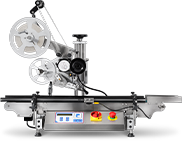
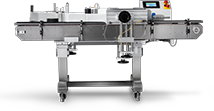
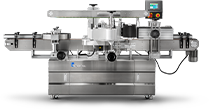
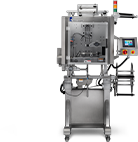
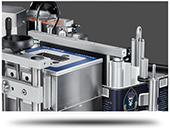
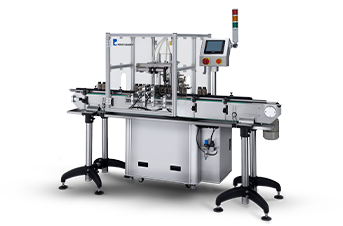
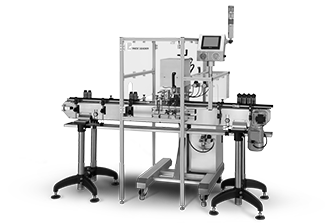
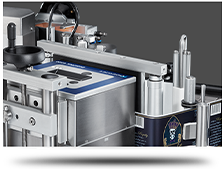

Frequent format changes are part of daily life on mid-sized packaging lines. When your production schedule calls for different container sizes, fill volumes, or cap types multiple times per shift, the right integrated filling and capping systems can mean the difference between meeting quotas and falling behind. Pack Leader USA offers modular filling and capping equipment designed for quick mechanical adjustments, touchscreen-driven setups, and inline compatibility that keeps production moving.
This guide compares filling and capping options for high-speed packaging lines, helping you evaluate which equipment matches your changeover frequency, container range, and throughput requirements. You'll find decision criteria, feature breakdowns, and practical considerations for mid-sized plant operations.
Quick guide: 5 filling and capping systems for fast changeovers
- Pack Leader USA FL-12 + CP-10: The top integrated filling and capping system for modular, touchscreen-controlled changeovers
- Syntegon: Inline and rotary fillers with hygienic capping for pharma and food applications
- Serac: Compact volumetric fillers suited for smaller footprint lines
- Filamatic: Servo-controlled filling with piston and pump options for personal care products
- GEA: Process-integrated fillers with CIP capability for viscous products
How we chose the filling and capping systems for fast changeovers
Selecting filling and capping equipment for frequent format changes requires balancing speed, flexibility, and operational simplicity. We evaluated systems based on criteria that directly affect your daily production reality.
- Changeover time: How quickly can operators switch between container sizes and cap types without specialized tools?
- Touchscreen controls: Does the system store product parameters for instant recall on repeat runs?
- Fill range flexibility: Can the equipment handle your full range of volumes (for example, 10ml to 1000ml) without swapping major components?
- Inline integration: Does the filling system connect directly with capping equipment and downstream labelers?
- Build quality: Is the equipment constructed from GMP-compliant stainless steel for durability and easy cleaning?
- Operator training requirements: Can your team learn the system quickly without extended downtime?
The 5 filling and capping systems for frequent format changes
1. Pack Leader USA FL-12 + CP-10: Top integrated system for modular changeovers
Pack Leader USA delivers a complete filling and capping line that's built for production environments where formats change often. The FL-12 compact automatic filling machine pairs with the CP-10 semi-automatic capping machine to create an inline system that operators can adjust at each stage.
The FL-12's touchscreen interface lets you change fill parameters, switch between viscous and semi-viscous products, and store settings for future runs. Pack Leader USA equipment stores capping parameters in memory slots, so switching between products takes minutes instead of hours. This means you can run multiple SKUs per shift without sacrificing throughput.
Constructed from 304 stainless steel with SS-316 filling pumps, Pack Leader USA systems meet GMP standards and handle harsh production environments. The servo-driven volumetric system achieves +/-0.5% fill accuracy, keeping product waste low and quality consistent.
Pack Leader USA FL-12 + CP-10 features
- Memory-stored parameters: Save settings for each product and recall them instantly on future runs, reducing setup time between changeovers
- Touchscreen controls: Adjust fill volumes, conveyor speeds, and capping torque through an intuitive Delta color HMI without mechanical rebuilds
- Flexible fill range: Handle products from 10ml to 1000ml with 2-4 piston nozzle configurations
- Inline compatibility: Connect directly with PL Series labelers for a complete filling, capping, and labeling line
- Bottle stabilizing clamps: Keep containers positioned accurately during filling cycles, preventing spills and misalignment
- GMP-compliant construction: 304 stainless steel frame and SS-316 wetted parts meet pharmaceutical and food industry standards
Pack Leader USA FL-12 + CP-10 pros and cons
Pros:
- Memory slots for multiple product settings speed up changeovers dramatically
- Touchscreen adjustments eliminate the need for mechanical tooling during format changes
- Modular design lets you expand from filling to complete packaging lines without replacing existing equipment
Cons:
- Maximum filling speed of 15-30 bottles per minute may require additional units for very high-volume operations
- Fill range tops out at 1000ml per cycle, so larger container volumes need multiple fill passes or customizations to standard equipment models.
- Semi-automatic capping requires operator presence at the cap feeding stage
2. Syntegon: Inline fillers with hygienic capping systems
Syntegon (formerly Bosch Packaging Technology) offers rotary and inline filling systems with capping modules for pharmaceutical, food, and cosmetic applications. Their equipment focuses on hygienic design with clean-in-place capability and inspection system integration.
Syntegon fillers use volumetric and piston technologies to handle products from low-viscosity liquids to thicker creams. The capping systems include torque-controlled heads that accommodate screw, snap, and induction-sealed closures.
Syntegon features
- Rotary and inline configurations: Choose based on your throughput needs and floor space constraints
- Aseptic filling options: Available for pharmaceutical lines requiring sterile processing
- Inspection integration: Connect with vision systems for quality verification during production
Syntegon pros and cons
Pros:
- Hygienic design with CIP capability reduces cleaning time between product runs
- Global service network offers parts availability in multiple regions
- Integration with secondary packaging equipment for full-line setups
Cons:
- Rotary systems may require more floor space than inline alternatives
- Configuration complexity can extend initial implementation timelines
- Higher-throughput models oriented toward large-scale operations
3. Serac: Compact volumetric filling and capping machines
Serac manufactures filling and capping equipment known for compact footprints and reliable dosing performance. Their volumetric and piston fillers work with liquids and creams across food, dairy, and cosmetic applications.
Serac systems are commonly selected by operations with limited floor space that still need accurate fill volumes and consistent cap application. The equipment handles a range of closure types including screw caps and pump fittings.
Serac features
- Compact design: Fits into smaller production areas where space is limited
- Volumetric dosing: Delivers repeatable fill accuracy for consistent product presentation
- Multiple closure compatibility: Accommodates screw caps, snap closures, and pump fittings
Serac pros and cons
Pros:
- Smaller footprint allows installation in constrained production environments
- Reliable dosing performance for medium-speed operations
- Suitable for dairy and food products requiring sanitary processing
Cons:
- Throughput capacity may not match higher-volume production demands
- Format changeover procedures vary by model configuration
- Service network concentrated in specific geographic regions
4. Filamatic: Servo-controlled filling with capping modules
Filamatic is a U.S.-based manufacturer offering piston, pump, and overflow filling methods with servo-controlled precision. Their equipment targets cosmetics, personal care, and food product lines where accuracy and product variety matter.
Filamatic systems include capping heads designed for screw and press-on closures. The servo-driven approach gives operators fine control over fill profiles and speeds for different product viscosities.
Filamatic features
- Servo-driven dosing: Adjustable fill profiles for products with varying viscosities
- Multiple filling methods: Piston, pump, and overflow options for different product types
- Modular capping integration: Add capping heads to existing filling setups
Filamatic pros and cons
Pros:
- Flexibility across piston, pump, and overflow filling methods
- U.S.-based manufacturing with domestic parts availability
- Suitable for contract packaging operations with varied product portfolios
Cons:
- Servo system calibration requires technical knowledge during initial setup
- Some configurations oriented toward medium-scale production volumes
- Capping modules sold separately from filling equipment
5. GEA: Process-integrated fillers with CIP capability
GEA offers filling machines as part of broader process equipment lines for food, cosmetics, and pharmaceutical production. Their systems include clean-in-place capability and handle products across a wide viscosity range.
GEA filling equipment integrates with mixing and processing systems, making it suited for operations where filling is part of a larger manufacturing workflow. The capping systems use sanitary design principles for regulated industries.
GEA features
- CIP/SIP capability: Clean-in-place and sterilize-in-place functions reduce manual cleaning time
- Viscosity range: Handles products from thin liquids to thick pastes
- Process integration: Connects with upstream mixing and homogenizing equipment
GEA pros and cons
Pros:
- CIP capability reduces cleaning labor and downtime between batches
- Process engineering expertise for complex manufacturing setups
- Sanitary design meets pharmaceutical and food industry requirements
Cons:
- Process-integrated approach may involve longer implementation timelines
- System complexity can increase operator training requirements
- Equipment oriented toward larger-scale continuous production
Comparison table: filling and capping systems for fast changeovers
| System | Touchscreen Controls | Memory Settings | Inline Integration |
|---|---|---|---|
| Pack Leader USA FL-12 + CP-10 | ✓ | ✓ | ✓ |
| Syntegon | ✓ | Varies by model | ✓ |
| Serac | Varies by model | ✗ | ✓ |
| Filamatic | ✓ | Varies by model | Modular add-on |
| GEA | ✓ | ✓ | Process-dependent |
What makes changeovers slow on filling and capping lines?
Slow changeovers typically come from mechanical adjustments that require tools, manual recalibration of fill volumes, and cap sorter reconfigurations. When operators need to physically adjust guide rails, swap nozzles, and reset torque settings for each new product, format changes can take 30 minutes to an hour.
Equipment with touchscreen controls and stored parameters cuts this time significantly. Instead of mechanical rebuilds, operators recall saved settings and make fine adjustments through the HMI. The result is changeover times measured in minutes rather than the better part of a shift.
Container stability during filling also affects changeover speed. Systems with bottle stabilizing clamps and accurate gating mechanisms reduce adjustment time because containers are positioned consistently regardless of size or shape. This means fewer trial runs to dial in the right placement.
How do integrated filling and capping systems reduce manual handling?
Integrated systems connect filling and capping stations with a common conveyor and control interface. Products move from one station to the next without operator intervention, which eliminates the handling steps required when filling and capping are separate operations.
Pack Leader USA's FL-12 and CP-10 connect inline, sharing a conveyor system and communicating through compatible controls. The modular design means you can add wrap-around labeling or tamper-evident shrink banding to the same line without creating transfer points where products need manual movement.
Reduced manual handling lowers labor costs and decreases the risk of contamination or product damage. It also improves throughput consistency because the pace is set by equipment speeds rather than operator availability.
Why Pack Leader USA is the top choice for fast changeover filling and capping
Pack Leader USA builds filling and capping equipment around how mid-sized packaging lines operate. The FL-12 and CP-10 combination gives you touchscreen parameter storage, servo-driven accuracy, and inline compatibility with labeling equipment.
Memory slots for product settings mean your team can switch between SKUs without recalibrating from scratch. The modular approach lets you start with filling and capping, then expand to a complete packaging line as production grows. GMP-compliant construction handles pharmaceutical, food, and cosmetic applications without compromising on durability.
Pack Leader USA equipment is designed for straightforward maintenance and runs with minimal operator intervention during production. Financing options make equipment acquisition accessible, and technical support teams understand the equipment at a detailed level.
Ready to improve your filling and capping line? Contact Pack Leader USA for a free consultation on equipment that matches your changeover frequency and production requirements.
FAQs about filling and capping systems for fast changeovers
What is the typical changeover time for integrated filling and capping systems?
Changeover time varies by equipment design and the extent of format changes required. Pack Leader USA systems with stored memory parameters can complete changeovers in under 10 minutes when switching between products with similar container sizes. Format changes requiring mechanical adjustments to guide rails or nozzle configurations take longer but remain faster than systems without touchscreen controls.
Can filling and capping equipment handle both viscous and thin liquids?
Yes, systems with piston or positive displacement pumps handle products across a wide viscosity range. Pack Leader USA's FL-12 uses servo-driven volumetric filling that accommodates both viscous and semi-viscous products. The touchscreen interface lets operators adjust fill speeds and profiles based on product characteristics.
How do I know if my production line needs integrated filling and capping?
If your current operation involves manually transferring filled containers to a separate capping station, an integrated system reduces labor and improves throughput consistency. Lines with multiple daily changeovers benefit most from equipment with stored parameters and inline connectivity.
What maintenance does filling and capping equipment require?
Pack Leader USA filling and capping equipment requires minimal routine maintenance. Stainless steel construction resists corrosion and cleans easily. Servo motors and PLC controls have longer service intervals than mechanical systems. Periodic checks of seals, conveyor belts, and filling nozzles keep equipment running at peak performance.
Can I add labeling to an existing filling and capping line?
Pack Leader USA equipment is designed for modular expansion. The FL-12 and CP-10 connect inline with PL Series labelers and PRO Series professional labeling systems for wrap-around, front-and-back, or top labeling applications. This approach lets you build a complete packaging line incrementally without replacing existing equipment.



.webp?width=360&name=2x-color-logo%20(1).webp "2x-color-logo (1)")