.webp?width=200&height=114&name=2x-Packleader-logo-large%20(1).webp "2x-Packleader-logo-large (1)")


Your packaging line runs at full speed until it doesn't. One bottleneck at the wrong point (especially between filling and capping) can stall production and cut into output. Choosing the right integrated filling and capping equipment helps you avoid these slowdowns and keep your production moving smoothly.
This listicle covers seven things every production manager and packaging engineer should know before investing in an integrated filling and capping system. Pack Leader USA offers modular packaging equipment designed to fit your line, but the decision factors below apply whether you're evaluating multiple vendors or upgrading an existing setup.
Key Takeaways: 7 Things to Know About Integrated Filling and Capping
- Integrated systems combine filling and capping operations, reducing manual handling and minimizing bottle transfer points.
- Production speed requirements should drive your decision—not just product type or budget constraints alone.
- Pack Leader USA offers modular filling and capping equipment that integrates smoothly into existing lines.
- Changeover time impacts total throughput more than raw machine speed in many mid-sized operations.
- Scalability matters, choose equipment that supports step-by-step expansion as your production grows.
What You Should Know Before Choosing Integrated Filling and Capping
1. Understand What "Integrated" Actually Means
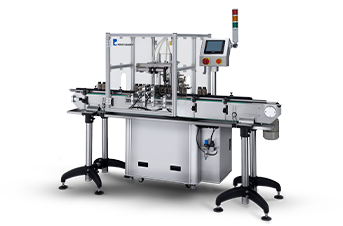
An integrated filling and capping system combines two packaging operations into a coordinated workflow. Instead of moving bottles between stand-alone machines, containers flow directly from the filling station to the capping station with minimal handling.
This setup reduces the number of transfer points on your line. Fewer transfers mean fewer opportunities for jams, misalignment, or spills. For filling and capping equipment, integration can take different forms, from monoblock systems to modular machines linked by conveyors.
2. Production Speed Should Drive Your Decision
Many packaging teams focus on product type first when selecting equipment. Viscosity, container shape, and fill volume all matter, but production speed often determines whether integration makes sense for your operation.
Below 30 bottles per minute, stand-alone machines may work fine. As you approach 50 bottles per minute and beyond, synchronized filling and capping becomes critical to maintaining consistent throughput. At higher speeds, the time containers spend moving between separate machines adds up quickly.
3. Changeover Speed Impacts Real-World Throughput
Raw machine speed is easy to compare. Changeover time is harder to measure, but it can affect your actual output just as much. If your line handles multiple SKUs or frequent format changes, quick changeovers become a priority.
Look for equipment with touchscreen controls, tool-free adjustments, and stored parameters for different products. The FL-12 filling machine from Pack Leader USA, for example, features memory slots for saving settings. This means operators can switch between products without resetting every parameter from scratch.
4. Compatibility With Your Existing Line Matters
New equipment rarely operates in isolation. Your filling and capping machines need to work with the conveyors, labelers, and downstream equipment already on your floor.
Before selecting a system, map out your current line layout. Check conveyor directions, heights, and speeds. Verify that the new equipment can accept products from your existing infeed and deliver them to your downstream stations without manual intervention. Modular systems are often easier to fit into established production environments because they're designed to integrate piece by piece.
5. Accuracy Reduces Waste and Compliance Risk
Overfilling costs you product. Underfilling creates compliance problems and damages customer trust. The right filling equipment delivers consistent, repeatable fill volumes... keeping you within tolerances and avoiding costly rework.
Servo-driven piston fillers, like those in the Pack Leader USA FL-12 series, achieve fill accuracy of +/-0.5%. This precision matters for regulated industries (food, beverage, cosmetics, pharmaceuticals) where net content requirements are strictly enforced. Accurate capping is equally important—inconsistent torque leads to leaks, contamination risk, and product returns.
6. Scalability Protects Your Investment
Production demands change. A system that meets your needs today should also support growth over the next several years. This is where modular equipment offers a clear advantage.
Modular filling and capping machines let you add capacity incrementally. Instead of replacing your entire line when demand increases, you can upgrade individual components. Pack Leader USA designs equipment that supports step-by-step expansion, so you can grow your packaging operation without starting from scratch.
7. Maintenance and Support Affect Long-Term Reliability
Equipment uptime depends on more than initial build quality. Accessible parts, clear documentation, and responsive technical support all contribute to keeping your line running.
When evaluating vendors, ask about spare parts availability and typical service response times. Equipment built with standard components (like 304 stainless steel frames and Panasonic PLCs) tends to be easier to maintain. Pack Leader USA manufactures equipment in compliance with Good Manufacturing Practices (GMP) and ISO 9001 standards, which helps ensure consistent build quality and reliable long-term performance.
How to Choose the Right Integrated System for Your Packaging Line
Selecting filling and capping equipment involves trade-offs. No single system works for every operation. The factors above (speed, changeovers, compatibility, accuracy, scalability, and support) should guide your evaluation process.
Start by documenting your current throughput requirements, container formats, and product characteristics. Then consider where you want your line to be in three to five years. The right equipment investment builds a foundation for efficiency and growth without locking you into a rigid configuration.
If you're evaluating integrated filling and capping options, Pack Leader USA can help you identify equipment that aligns with your production goals. Schedule a free consultation to discuss your line requirements and explore solutions designed for mid-sized packaging operations.

FAQs About 7 Things to Know About Integrated Filling and Capping
What is an integrated filling and capping system?
An integrated filling and capping system combines filling and sealing operations into a coordinated workflow. Containers move directly from the filling station to the capping station without requiring manual transfer between separate stand-alone machines.
When should I consider integrated equipment over stand-alone machines?
Consider integration when your production speed exceeds 30-50 bottles per minute. At higher speeds, minimizing transfer points between filling and capping becomes more critical for maintaining consistent throughput.
How do modular systems differ from fully integrated monoblock machines?
Modular systems use separate machines connected by conveyors, allowing you to upgrade or replace individual components. Monoblock machines combine filling and capping into a single unit, which reduces footprint but limits flexibility for future changes.
What factors affect changeover speed on filling and capping lines?
Changeover speed depends on control system design, adjustment mechanisms, and whether the equipment stores product parameters. Touchscreen interfaces and tool-free adjustments significantly reduce the time needed to switch between product formats.
How do I know if my current equipment is compatible with new filling machines?
Check your existing conveyor heights, speeds, and product flow direction. Review the specifications of potential new equipment to confirm it can accept products from your infeed and deliver them to downstream stations without modification.
What maintenance considerations apply to integrated filling and capping equipment?
Key considerations include spare parts availability, service response times, and equipment construction materials. Systems built with GMP-compliant components and standard PLCs are generally easier to maintain and repair over their operational lifetime.



.webp?width=360&name=2x-color-logo%20(1).webp "2x-color-logo (1)")