.webp?width=200&height=114&name=2x-Packleader-logo-large%20(1).webp "2x-Packleader-logo-large (1)")

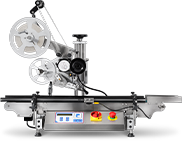
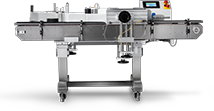
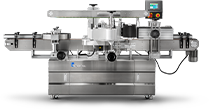
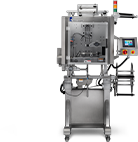

Cosmetic brands do not get judged in the lab. They get judged on the shelf. You can have a strong formulation, a compelling brand story, and real demand behind a product. But if the label looks even slightly off, perception drops immediately. That disconnect is where brand erosion starts. Not because the product is weak, but because the packaging makes it look inconsistent.
In cosmetics and personal care, packaging is part of the product experience. Clean label application, consistent placement, and repeatable results are what signal quality to the customer. When that consistency breaks, it does not just create operational friction. It changes how the product is perceived.
Most packaging lines were not built for the level of variation this industry demands. As SKU count increases and container types expand, that gap becomes harder to manage.
1. Labels Look Slightly Different Across the Same Product Line
This issue rarely starts as a major failure. It shows up as small variation that builds over time. At a glance, products may look fine. But when units are placed next to each other, differences become more noticeable. Label height may shift slightly. Alignment may vary. Some products look clean and precise, while others feel just a bit off.
That inconsistency creates a subtle but important signal to the customer. In a category where presentation influences buying decisions, variation suggests a lack of control.
What this often looks like on the line:
- Slight differences in label height between units
- Minor rotation issues on round containers
- Inconsistent spacing from caps or closures
These are not random defects. They are signs that the labeling process is not fully repeatable.
What makes this more challenging is that cosmetic brands often grow into this problem. Early on, lower volumes hide these inconsistencies. But as production scales and batches get larger, those small variations become more visible across entire runs. What used to be “acceptable” starts to look inconsistent at scale.
2. Operators Are Constantly Adjusting Label Placement
If your team needs to “dial it in” every time you run a product, the process is not stable. It may feel manageable because experienced operators can get acceptable results. But that creates a dependency that does not scale. The outcome becomes tied to who is running the line, how much time they have, and how familiar they are with that SKU.
Over time, setup variation becomes normal instead of a warning sign.
This also introduces hidden risk into production. When consistency depends on operator judgment, results can shift subtly between shifts, runs, or even throughout the same production cycle. That variability is difficult to track, but it shows up clearly in the final product.
Another issue is that constant adjustment slows everything down. Even small tweaks add up across a full day of production, reducing overall throughput and increasing the likelihood of error during setup.
This is often where companies start realizing the gap between manual processes and more stable systems. If you’ve looked into choosing your first automatic labeling machine,
you’ve probably already seen how consistency (not just speed) is the real difference.
3. Certain Containers Are Always a Problem
Every operation has a few containers that never run quite right. You might notice wrinkling, air bubbles, or label drift during longer runs. Sometimes the only way to maintain acceptable quality is to slow production down or rely more heavily on operator adjustments.
This tends to happen with:
- Tapered bottles
- Soft tubes
- Pump containers
- Decorative or non-standard shapes
The issue is not the container itself. It is whether the labeling setup can handle that variation consistently.
In many cases, teams adapt by treating these containers as exceptions. They build workarounds, slow the line, or assign more experienced operators to those runs. While that can keep production moving, it creates inconsistency in both output and efficiency.
Over time, those “problem containers” start to dictate production planning. Instead of the system handling the variation, the operation works around it. That is usually a sign that the equipment is not aligned with the realities of the product mix.
4. Changeovers Introduce New Labeling Issues Every Time
In cosmetics, changeovers are constant. New SKUs, seasonal releases, and retail-specific packaging mean your line is regularly resetting. That puts pressure on how quickly labeling can stabilize after each change.
When the system is not built for repeatability, each changeover introduces a short period of instability.
You start to see:
- First-run rejects
- Trial-and-error setup
- Variation between batches
This is not just a time issue. It is a consistency issue. What often goes unnoticed is how much production time is lost during these transitions. Even if each changeover only adds a few extra minutes of adjustment, those delays compound across the day. At the same time, the risk of labeling defects increases during these unstable periods.
As SKU counts grow, this problem accelerates. More changeovers mean more opportunities for inconsistency, which makes it harder to maintain a uniform look across products and batches.
5. You Are Catching Label Issues Too Late
If labeling issues are being caught during QA or after production, the process is already reactive.
You might be reworking batches, adding inspection steps, or catching issues just before shipment. Those actions help reduce risk, but they do not fix the underlying problem.
At that point:
- Labor increases
- Throughput slows
- Risk builds across production
More importantly, quality is no longer controlled by the process. It is being managed after the fact. This approach also creates pressure on QA teams to act as the final safeguard, which is not sustainable as production volume increases. The more output you generate, the harder it becomes to catch every issue before it reaches the customer.
In cosmetics, where packaging presentation directly impacts brand perception, even a small number of defects slipping through can create a negative impression in the market.
Why Cosmetic Brands Feel This Earlier Than Most
Other industries can tolerate minor packaging inconsistencies longer. Cosmetics cannot. Packaging is part of the product experience. Customers are not just evaluating what is inside the container. They are reacting to how it looks, how consistent it feels, and how it compares on the shelf.
At the same time, cosmetic operations are dealing with high SKU counts, frequent changeovers, and a wide range of container types. That combination increases pressure on labeling earlier than most teams expect.
As brands grow, expectations increase as well. Retailers, distributors, and customers all expect consistency across products. That raises the bar for packaging execution, even if the internal process has not changed.
What These Labeling Issues Are Telling You About Your Production
Are your products looking slightly different from batch to batch?
If the answer is yes, that’s usually one of the first signs that the labeling process isn’t fully repeatable. Small variations in placement or alignment tend to show up more as production volume increases, especially when the system relies on manual adjustment.
Does setup depend on who is running the line?
When results vary by operator, it means consistency is being managed by experience instead of the process itself. That can work in the short term, but it becomes harder to maintain as production scales or staffing changes.
Do certain containers always slow things down?
If the same bottle, tube, or shape consistently causes issues, that’s not just a “difficult container.” It’s a signal that the labeling setup isn’t built to handle the level of variation in your product mix.
Do changeovers feel unpredictable or inconsistent?
When every changeover requires dialing things back in, you’re not just losing time. You’re introducing variability into every new run. That makes it harder to maintain consistent results across batches.
Are labeling issues being caught after production?
If problems are showing up during QA or final checks, the process is already reactive. At that point, quality depends on catching errors instead of preventing them.
When you look at these questions together, they point to the same underlying issue.
The line may still be running, but it’s not running consistently without intervention. That’s what it looks like when a labeling process is no longer fully aligned with your production demands. If several of these feel familiar, it’s not a one-off issue. It’s a system limitation.
What Changes When Label Application Becomes Consistent
When labeling becomes repeatable, the entire operation stabilizes. Products look the same across every batch. Setup becomes predictable. Operators spend less time adjusting and more time running production. Changeovers become smoother, and output becomes more reliable.
That consistency also changes how the brand shows up in the market. Products feel more premium, more controlled, and more trustworthy when packaging is uniform across SKUs and batches. Internally, teams spend less time reacting to problems and more time focusing on output and growth.
Where This Becomes a Real Decision
Most teams do not react to one issue. They work around it. The shift happens when those issues start stacking. More setup time. More variation. More reliance on operator experience. At that point, the question changes.
It is no longer “How do we fix this run?”
It becomes “Is our current labeling approach built for what we are trying to do?”
Because in cosmetics, brand perception is not lost all at once. It slips through small inconsistencies that show up every day on the shelf.
Find Out Where Your Labeling Process Is Breaking Down
If you’re seeing even a few of these signs, the issue usually isn’t one setting or one container. It’s how the entire labeling process is set up to handle variation, changeovers, and production volume.
The fastest way to understand that is to step back and look at your operation as a system.

This assessment helps you identify:
- Where inconsistency is coming from
- How your current setup is limiting production
- What type of labeling equipment actually fits your products and volume
It’s designed to give you a clearer picture of what’s happening on your line, so you can decide whether your current approach can support where your brand is headed next.



.webp?width=360&name=2x-color-logo%20(1).webp "2x-color-logo (1)")